
Generics Act
1988Mandated generic prescribing and labelling to widen access to affordable essential medicines.
Dr. Marilen J. Dañguilan has spent four decades moving between public health, governance, peacebuilding and geopolitics — shaping landmark Philippine reform and advising institutions on how policy can be changed when it no longer serves the public interest.
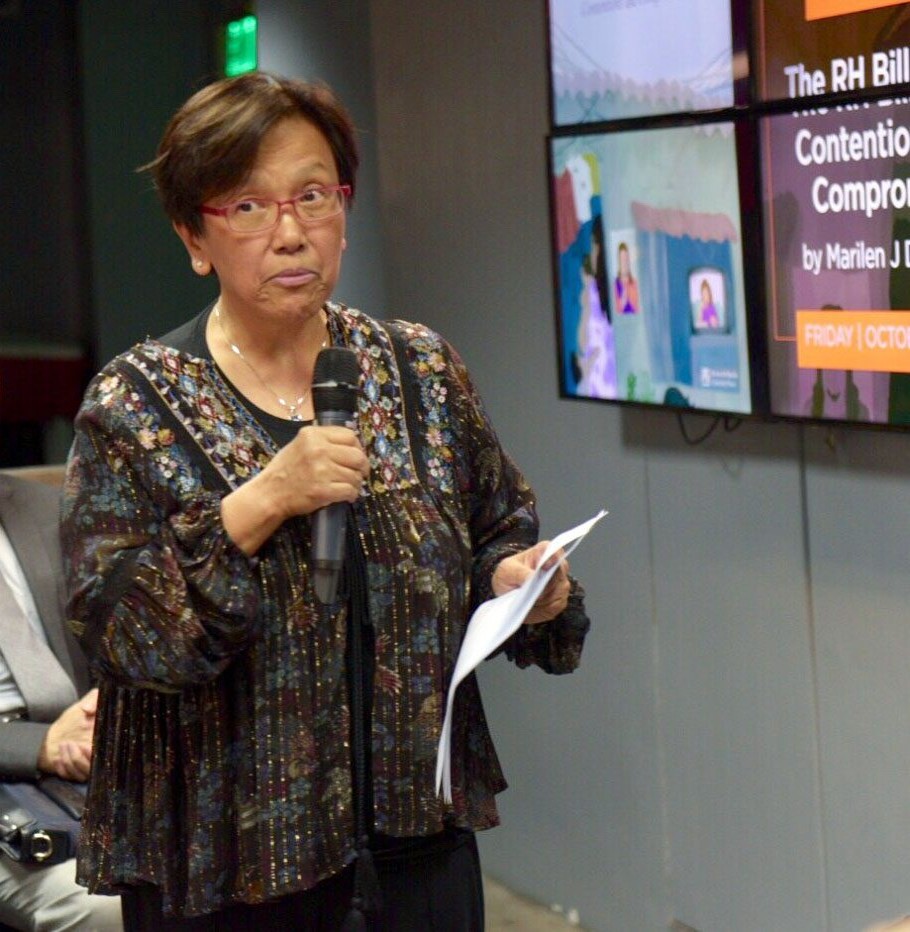
Marilen J. Dañguilan is a medical doctor, policy reformer, writer and adviser whose work has moved across public health, governance, international development, peacebuilding and, more recently, geopolitics and security.
Across these very different fields runs a consistent concern: how institutions exercise power, whom they serve, and how public policy can be changed when institutions no longer serve the public interest.
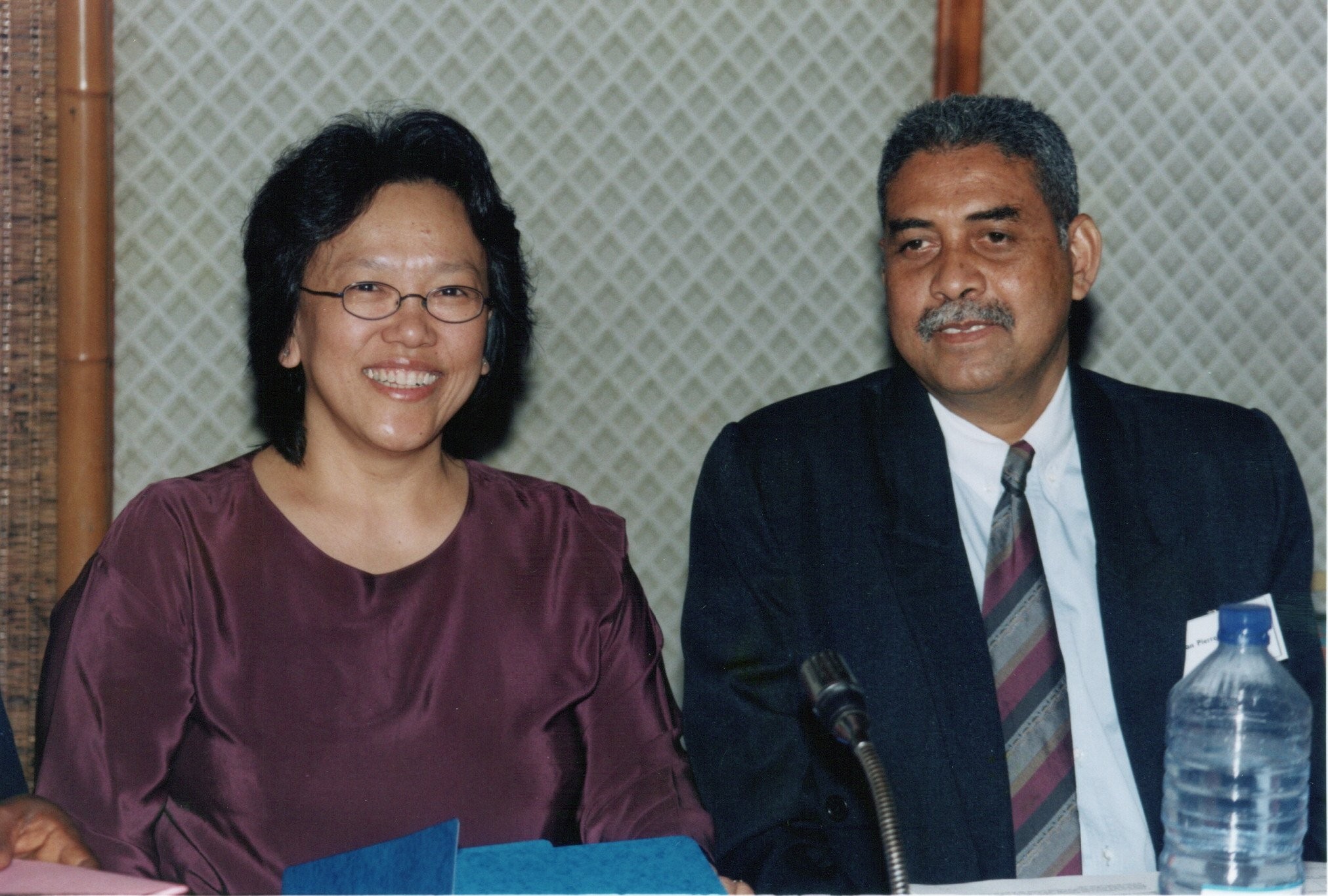
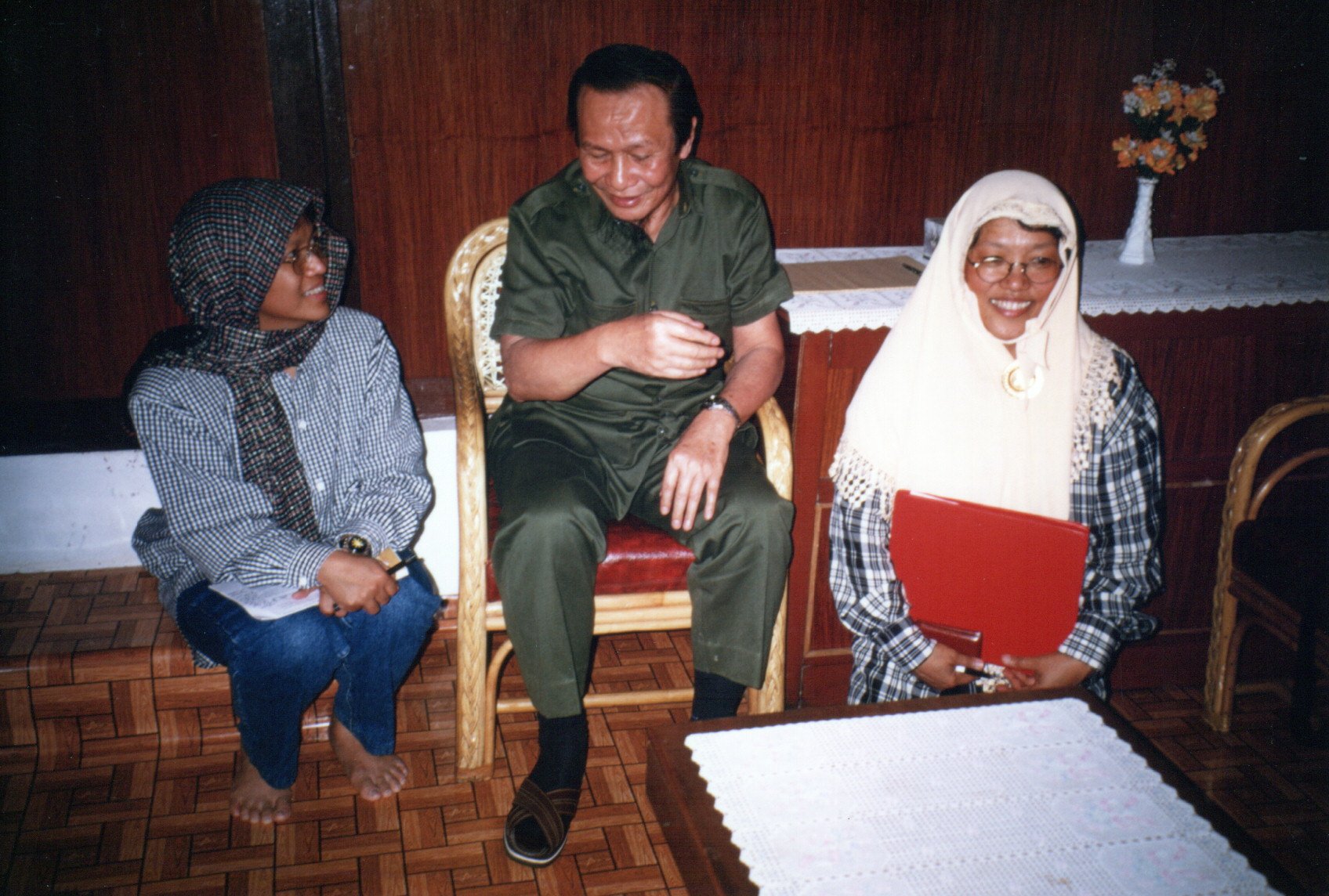
In the Philippine Senate, Dr. Dañguilan helped shape the reforms that still define how Filipinos access care, medicines and protection.
Mandated generic prescribing and labelling to widen access to affordable essential medicines.
Established rooming-in in hospitals to support early breastfeeding and infant health.
Codified the rights, benefits and protections of the country's public health workforce.
Helped shape the National Health Insurance Program that became the backbone of universal coverage.
Her international career carried her across the UN system; her work in the Philippines has spanned reproductive health advocacy, institution-building, and the development of Salubris Medical Center.
Regional health policy and systems work.
Global child survival and policy advocacy.
Food security, nutrition and humanitarian response.

Field Mission— peacebuilding & institutions
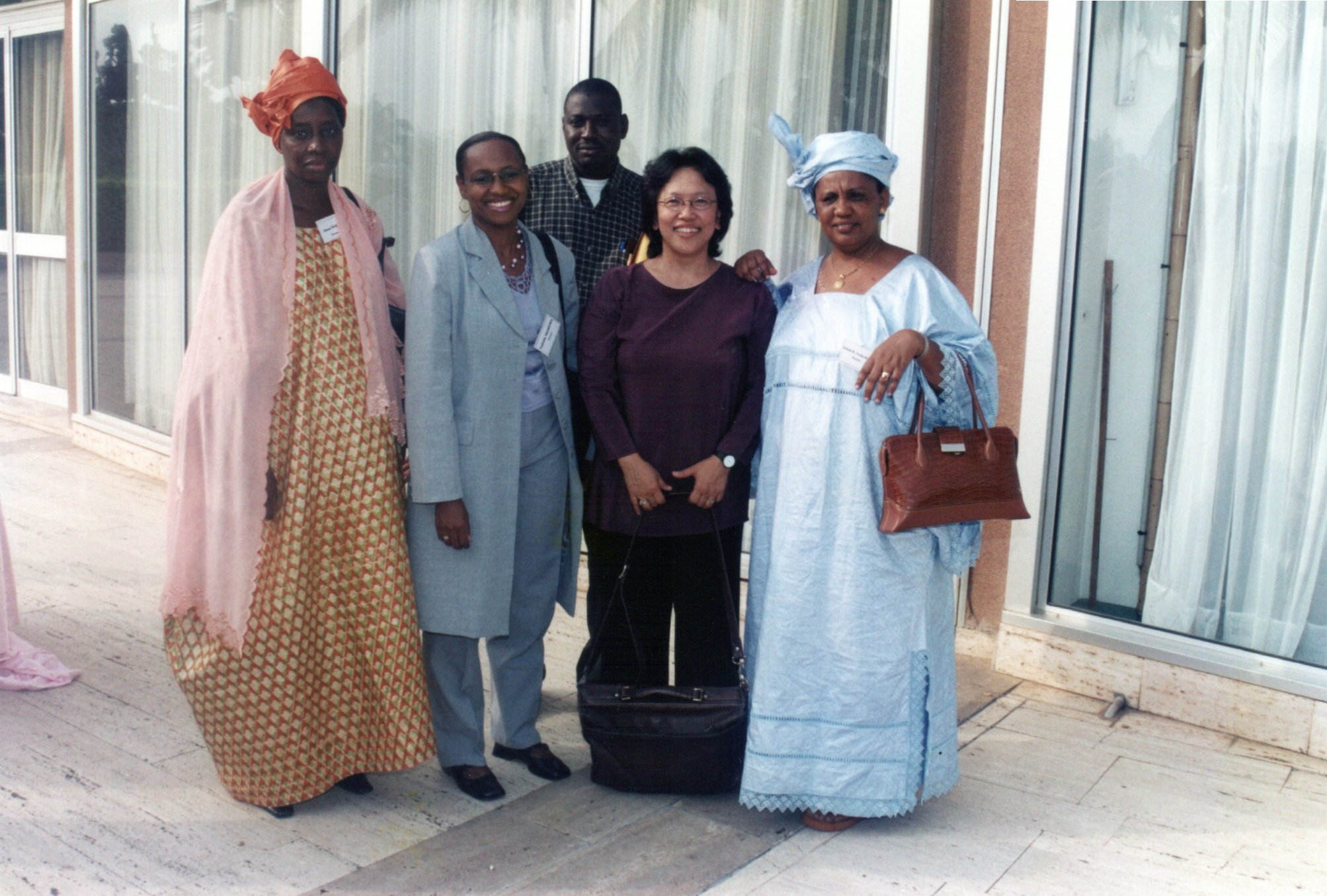
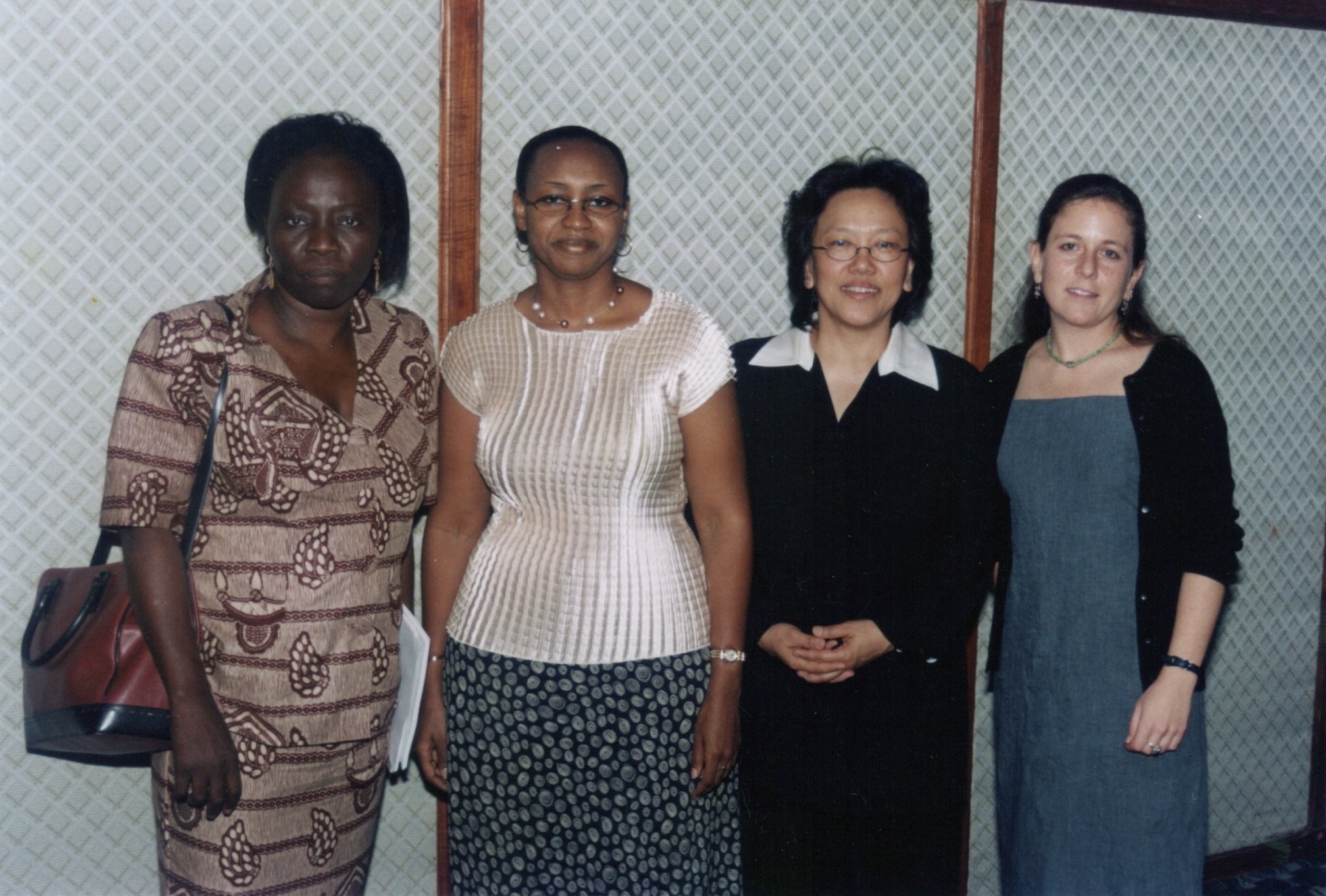
International delegations & global development missions
Dr. Marilen J. Dañguilan is an award-winning author whose books have chronicled the politics of population policy, contested the Vatican’s influence over women’s bodies, and documented the making of the landmark Philippine Reproductive Health Law.
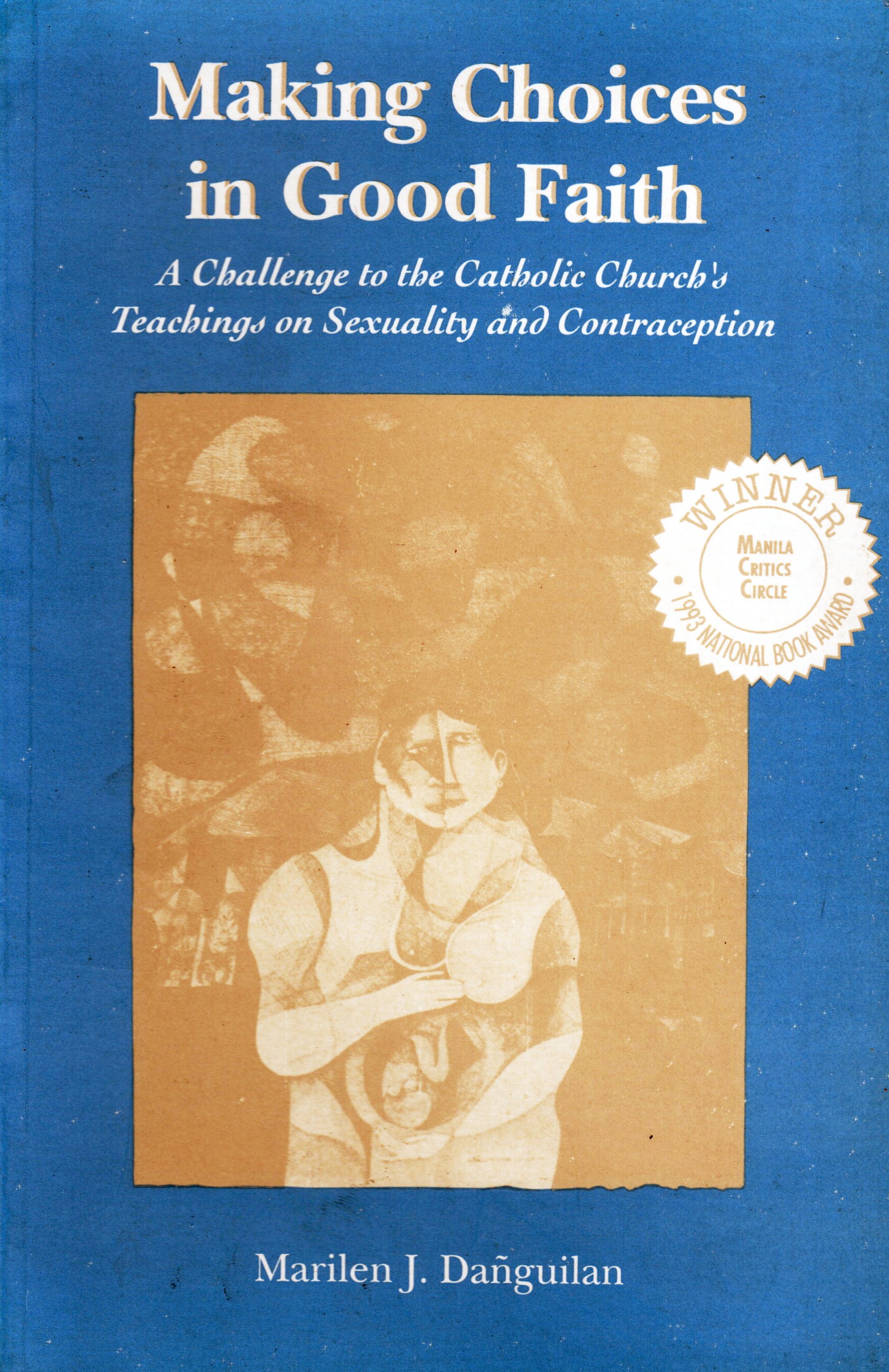 Front
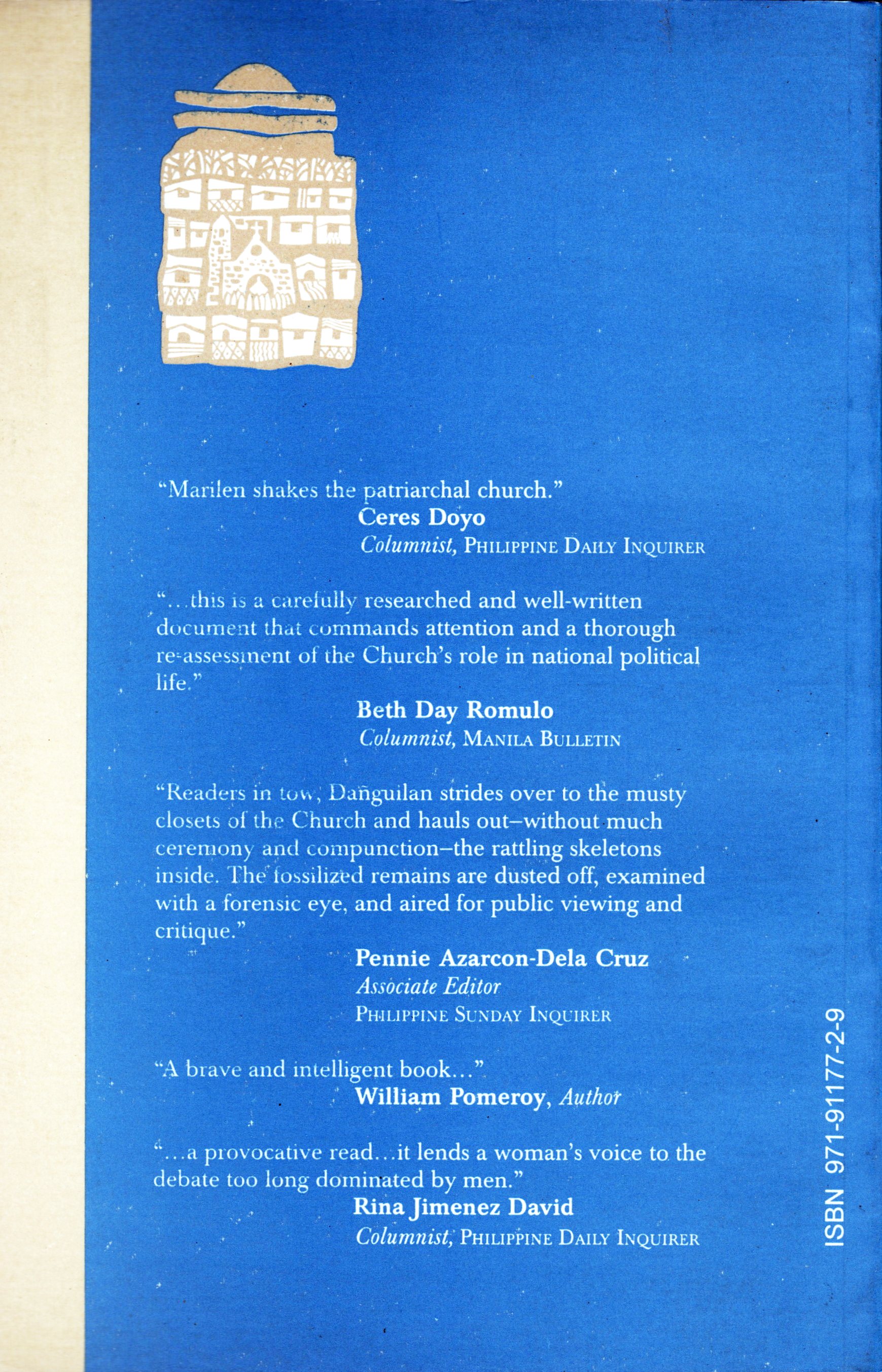 Back
A Challenge to the Catholic Church's Teachings on Sexuality and Contraception
A groundbreaking, courageously argued challenge to Catholic orthodoxy on sexuality, contraception, and women's bodily autonomy in a predominantly Catholic democracy.
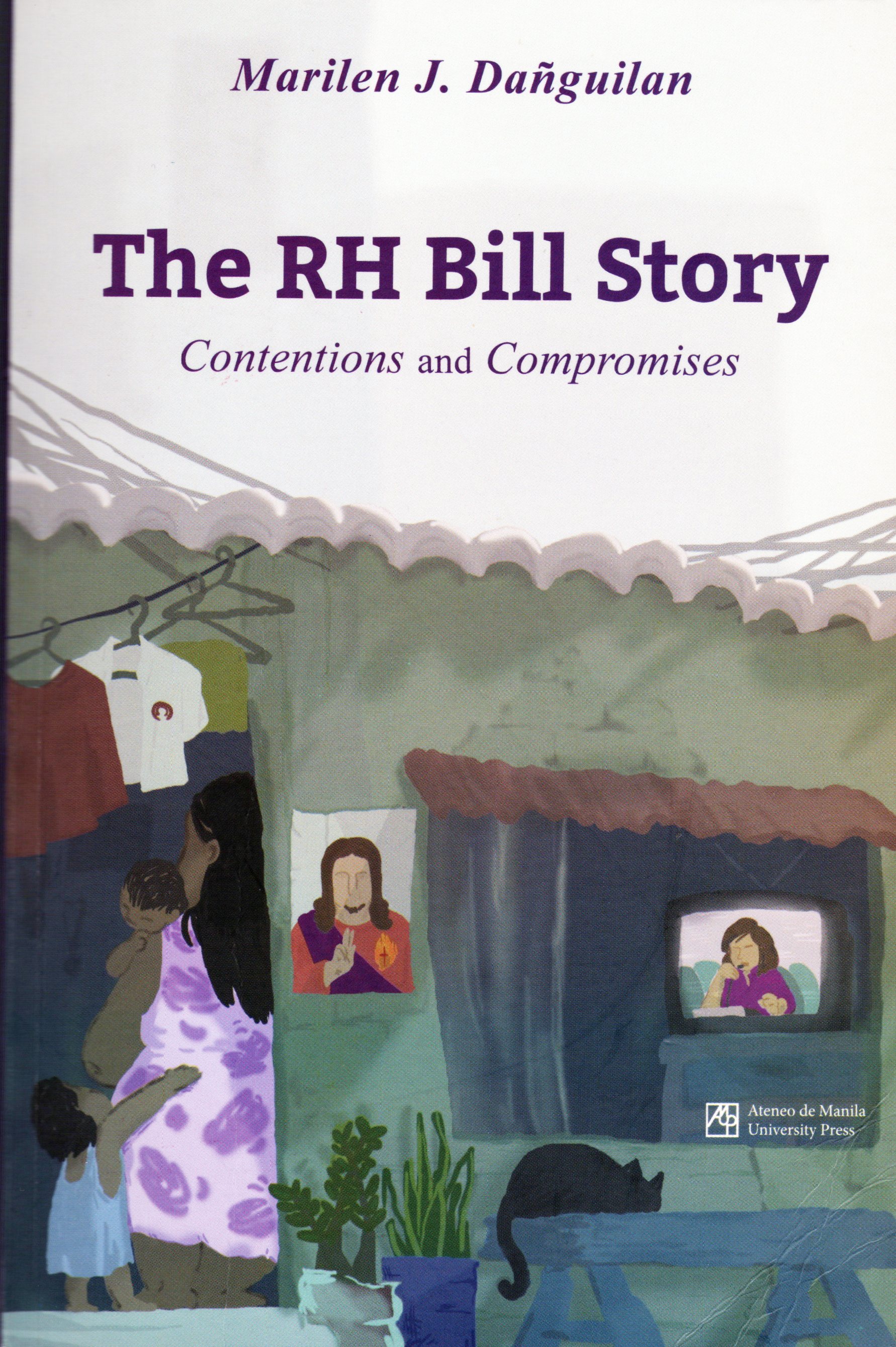 Front
 Back
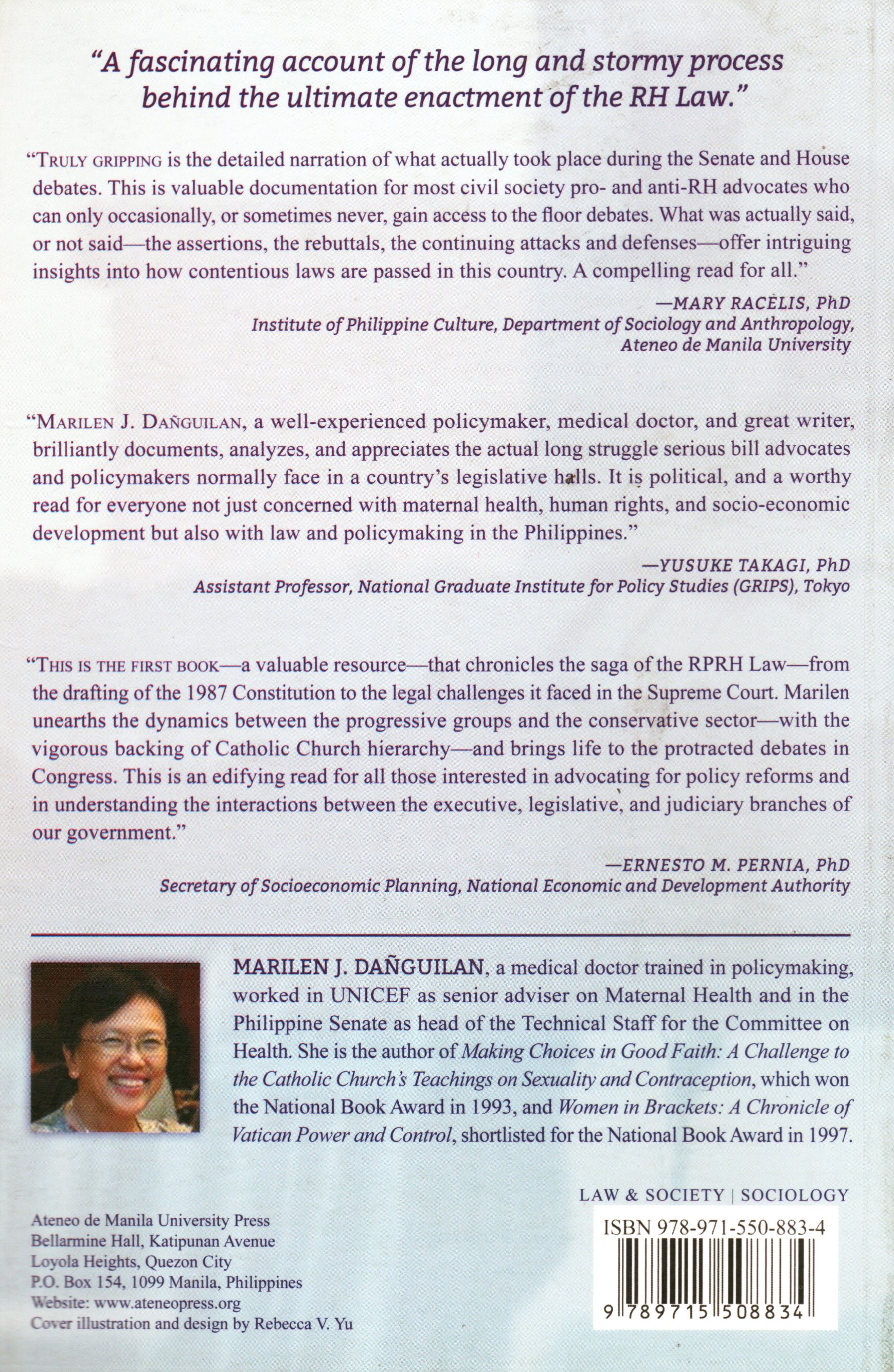
Contentions and Compromises
The definitive insider and analytical account of the grueling, fifteen-year battle to pass Republic Act No. 10354 — the landmark Philippine Responsible Parenthood and Reproductive Health Act.
 Front
 Back
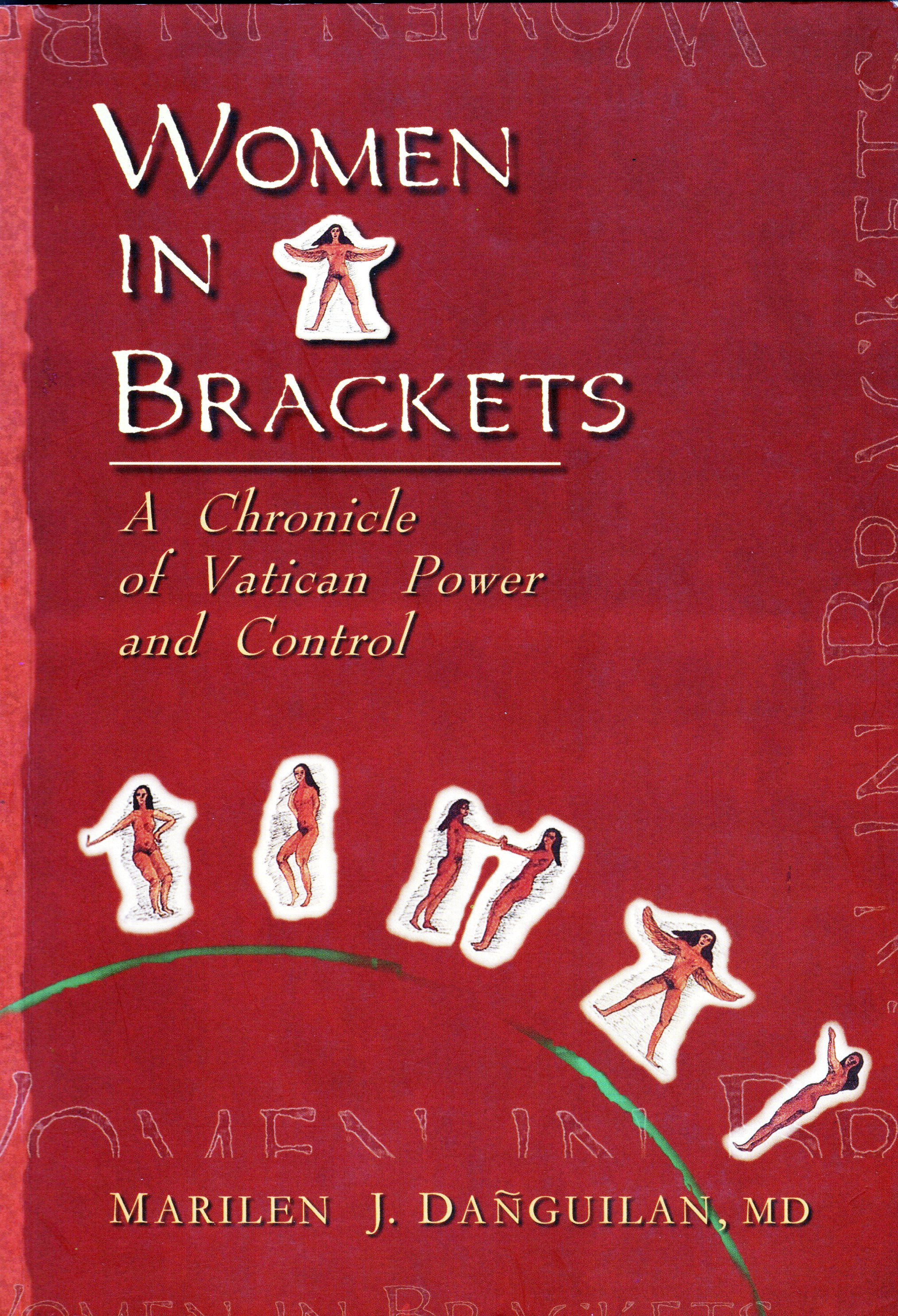
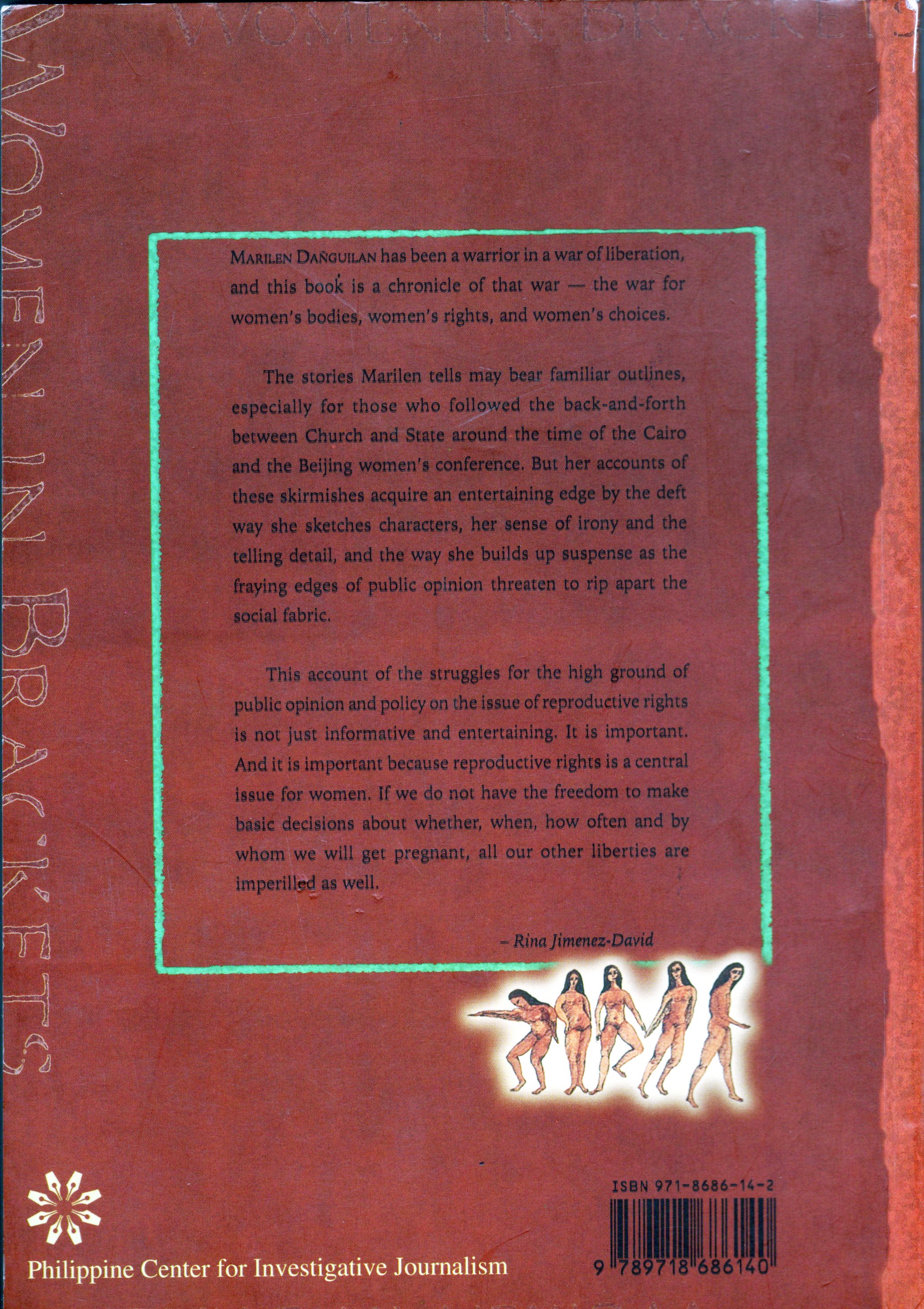
A Chronicle of Vatican Power and Control
A piercing diplomatic chronicle examining how conservative coalitions, led by the Holy See, placed women's rights inside diplomatic brackets at major United Nations global summits.
Archival high-res scan · Click image to expand
Law & Society / Sociology · Bellarmine Hall, Katipunan Avenue, Quezon City
Contentions and Compromises
Illuminates the fierce parliamentary maneuvers, civil-society mobilizations, backroom compromises, and deep moral fractures that finally codified reproductive healthcare into Philippine statute.
"A fascinating account of the long and stormy process behind the ultimate enactment of the RH Law. Truly gripping is the detailed narration of what actually took place during the Senate and House debates... A compelling read for all."
"Marilen J. Dañguilan, a well-experienced policymaker, medical doctor, and great writer, brilliantly documents, analyzes, and appreciates the actual long struggle serious bill advocates and policymakers normally face in a country's legislative halls."
"This is the first book—a valuable resource—that chronicles the saga of the RPRH Law—from the drafting of the 1987 Constitution to the legal challenges it faced in the Supreme Court. Marilen unearths the dynamics between progressive groups and the conservative sector... An edifying read."
Explore Dr. Marilen J. Dañguilan’s online policy briefs, interactive maritime security frameworks, newspaper commentaries, and foreign policy analyses published across dedicated digital portals, national media, and academic centers.
Building a Shoreline-Based Reporting and Response System (SRRS) in the Philippines
“Deterrence does not begin at sea—it begins where pressure is first felt: at the shoreline.”
A systems-level policy brief proposing the SRRS to connect frontline observations from fisherfolk, Bantay Dagat, and Archipelagic Women of the Philippines into the National Maritime Center and NTF-WPS for early pattern recognition.
Philippine Policy Space on Taiwan: A More Secure Philippines in a More Uncertain Region
“What Beijing says the Philippines cannot do is one thing; what the Philippines has decided it cannot do is another.”
An authoritative assessment of Philippine functional cooperation with Taiwan under the 1975 Joint Communiqué, examining the ~140 km Batanes–Taiwan corridor, evacuation plans for 250,000 Filipino workers, and sea lane protection.
Building a Shoreline-Based Reporting and Response System (SRRS) in the Philippines
A systems-level policy brief showing that Philippine deterrence breaks down not from lack of capability or alliances, but from the failure to capture and connect early signals from coastal communities into national decision-making.
“Deterrence does not begin at sea—it begins where pressure is first felt: at the shoreline.”
Policy Brief Platform · DAP Geopolitics & IR
srrs.marilenjdanguilan.com
Complete Academic Monograph & Strategic Policy Architecture
The complete, unabridged policy monograph submitted for the Certificate Course in Geopolitics and International Relations at DAP, featuring full empirical data, historical precedents (Mischief Reef 1995, Scarborough 2012), and legal annexes.
“When the State sees earlier, it decides faster—and acts together.”
Faculty of the Development Academy of the Philippines
policybrief.marilenjdanguilan.com
Philippine Policy Space on Taiwan: A More Secure Philippines in a More Uncertain Region
A strategic assessment of Philippine functional cooperation with Taiwan under the 1975 Joint Communiqué, examining contingency planning for ~250,000 Filipino workers, Luzon Strait sea lanes, and Batanes maritime proximity.
“What Beijing says the Philippines cannot do is one thing; what the Philippines has decided it cannot do is another. The Philippines has policy space. Use it deliberately.”
Foreign Policy Briefing · Strategic Studies
meco.marilenjdanguilan.com
Why modernizing civil registration and vital statistics is an urgent human rights and national security priority
With Nenita B. Dalde
An authoritative commentary on the 3.7 million unregistered Filipinos left legally invisible without birth certificates, detailing four non-negotiable legislative reforms for universal, mobile, and digital civil registration.
“Reforming the civil registration and vital statistics system isn’t just about making registries. It’s about making people visible—because if the state can’t see them, how can it serve them?”
Philippine Daily Inquirer
opinion.inquirer.net
Why the DOH should treat private clinical facilities as partners rather than adversaries
With Deogracias Victor M. Dañguilan
A hard-hitting opinion piece drawing on the real-world operational challenges of the Vicente L. Dañguilan Memorial Clinic in Solano, Nueva Vizcaya, critiquing rigid, illogical DOH licensing regulations and advocating for genuine public-private health partnerships.
“The DOH should change its mindset regarding private health-care facilities... viewing them not as adversaries or competitors but as potential partners who significantly improve people’s health care.”
Philippine Daily Inquirer
opinion.inquirer.net
34 min 7 sec
Episode 97 · She Talks Peace Podcast with Amina Rasul and Dr. Ayesah Uy Abubakar
In this candid, policy-grounded conversation on She Talks Peace, Dr. Marilen J. Dañguilan examines the urgent reality of reproductive, maternal, and infant health care across the Philippines, with specialized focus on the Bangsamoro Autonomous Region in Muslim Mindanao (BARMM).
“Women need not die while giving life. Addressing maternal mortality in the Bangsamoro requires institutional accountability, continuous resources, and placing peace at the center of health care.”
She Talks Peace · Hosted by Amina Rasul & Dr. Ayesah Uy Abubakar
open.spotify.com
Country Director of Population Services Pilipinas, Inc. · Religion, Politics & Health Inequities
An in-depth scholarly interview conducted in Washington, D.C. on the intersection of Catholic Church hierarchy, institutional power, and women's reproductive health policy in the Philippines.
“Inside the Catholic Church, there is faith and there are institutions. And the institutions can be very strong... It’s the fact that they have institutionalized themselves into the fundamental structures of Filipino governance.”
Berkley Center for Religion, Peace and World Affairs · Georgetown University
berkleycenter.georgetown.edu
Coverage of Dr. Marilen J. Dañguilan's book launch at Rappler HQ with Rep. Edcel Lagman & Sen. Risa Hontiveros
On October 19, 2018, lawmakers, medical leaders, and human rights advocates gathered at Rappler Headquarters for the launch of Dr. Marilen J. Dañguilan's book 'The RH Bill Story: Contentions and Compromises'. Keynote speeches by Rep. Edcel Lagman and Sen. Risa Hontiveros celebrated the 11-year legislative victory while emphasizing that protecting women's health autonomy remains an ongoing effort.
“The RH Law forever changed the political landscape of a country whose lack of a rights-based, health-oriented, and development-driven policy on reproductive health made it seem permanently fossilized.”
Rappler Philippines
rappler.com
Action for Economic Reforms (AER) Yellow Pad Policy Essay on Dr. Marilen J. Dañguilan's Book
With Filomeno S. Sta. Ana III
A policy analysis and review by Filomeno Sta. Ana III examining Dr. Marilen J. Dañguilan's 'The RH Bill Story: Contentions and Compromises', detailing how collective action, focused advocacy, and principled compromise overcame entrenched institutional opposition to pass landmark health legislation.
“Dañguilan’s RH Bill Story is an essential read not only for health practitioners but for all who pursue or follow public policy... a reference for continuing and future struggles.”
Action for Economic Reforms (AER) · Yellow Pad
aer.ph
Why public financing becomes generous only after kidneys fail rather than funding prevention
A trenchant critique of Philippine public health financing priorities, dissecting why PhilHealth and the health system allocate billions for late-stage hemodialysis while neglecting cost-effective early detection and prevention of chronic kidney disease.
“The central issue is why public financing becomes so much more generous after kidneys fail than when they can still be saved.”
Rappler Voices
rappler.com
Book Review: The RH Bill Story: Contentions and Compromises by Marilen J. Dañguilan
A featured online review and critical appreciation published in Positively Filipino, hailing Dr. Marilen J. Dañguilan's 'The RH Bill Story: Contentions and Compromises' as an indispensable insider's chronicle of the fifteen-year legislative battle that transformed Philippine health policy.
“A true chronicle of the Reproductive Health Law's odyssey—an indispensable narrative of how health policy is fought and won against entrenched institutional opposition.”
Positively Filipino · Online Magazine for Filipinos in the Diaspora
positivelyfilipino.com
Analysis of the implementation gap and unfinished agenda of Republic Act 10354
A searching analysis of the post-enactment trajectory of the landmark Reproductive Health Law (RA 10354), examining why a hard-won legislative victory has struggled to translate into fully realized policy outcomes — and what the gap between law and implementation reveals about institutional accountability, sustained advocacy, and the enduring resistance to rights-based reproductive health policy in the Philippines.
“Passing a law is not the same as changing a system. The reproductive health law's hardest battles came after the signing — in the agencies, the courts, and the budgets where policy is actually made real.”
Rappler Voices · Thought Leaders
rappler.com
The thread across four decades: how institutions exercise power, whom they serve, and how policy changes when they no longer serve the public.
Health-system reform, social insurance, the health workforce, and how institutions govern care.
Working across conflict and community — how institutions rebuild trust after division.
Her most recent turn: the security of the seas and the geopolitics shaping the region.

“How institutions exercise power, whom they serve, and how public policy can be changed when institutions no longer serve the public interest.”
A curated visual archive documenting Dr. Marilen J. Dañguilan at work across peace negotiation zones, community institutions, multilateral health missions, and leadership dialogues.

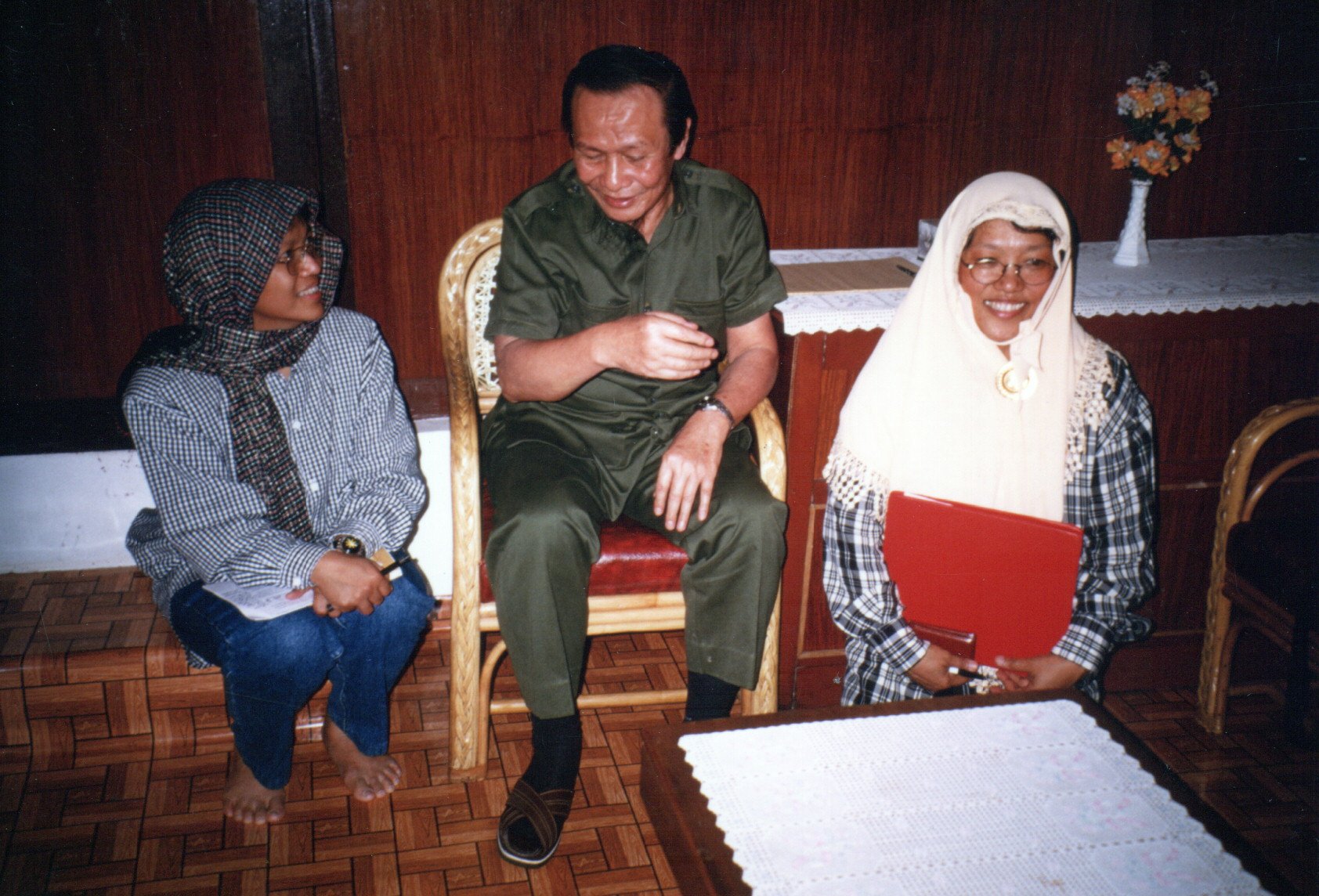
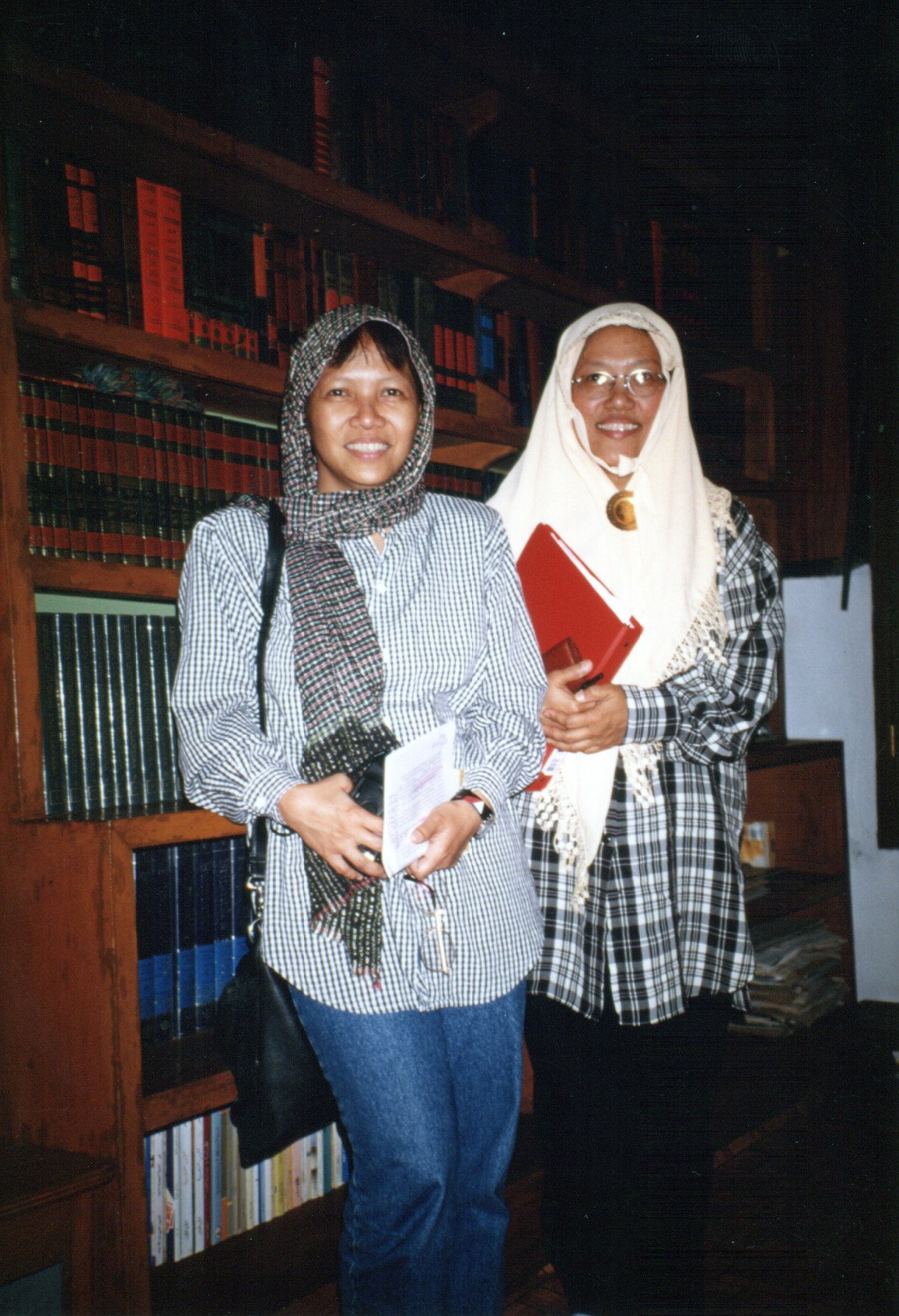
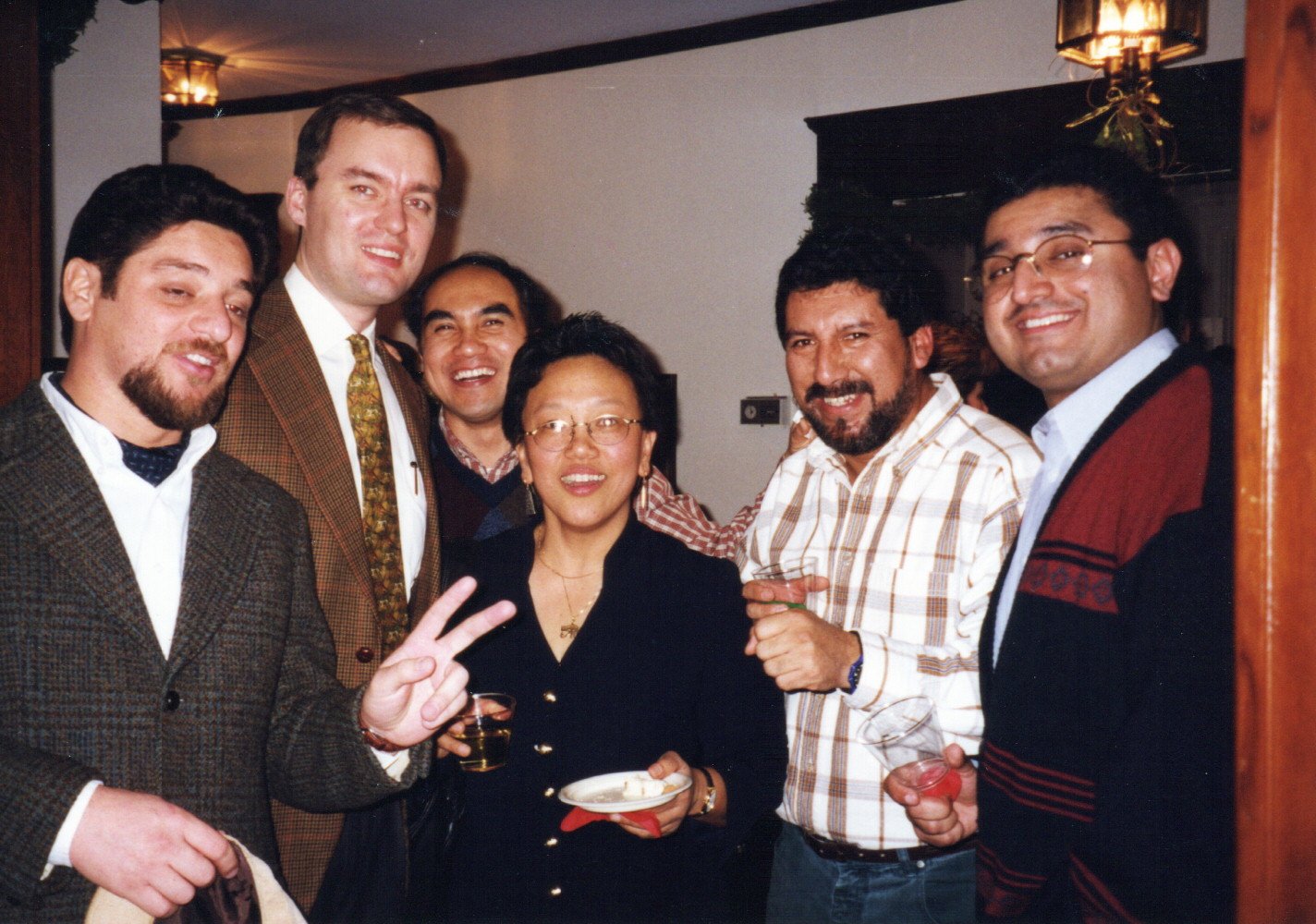
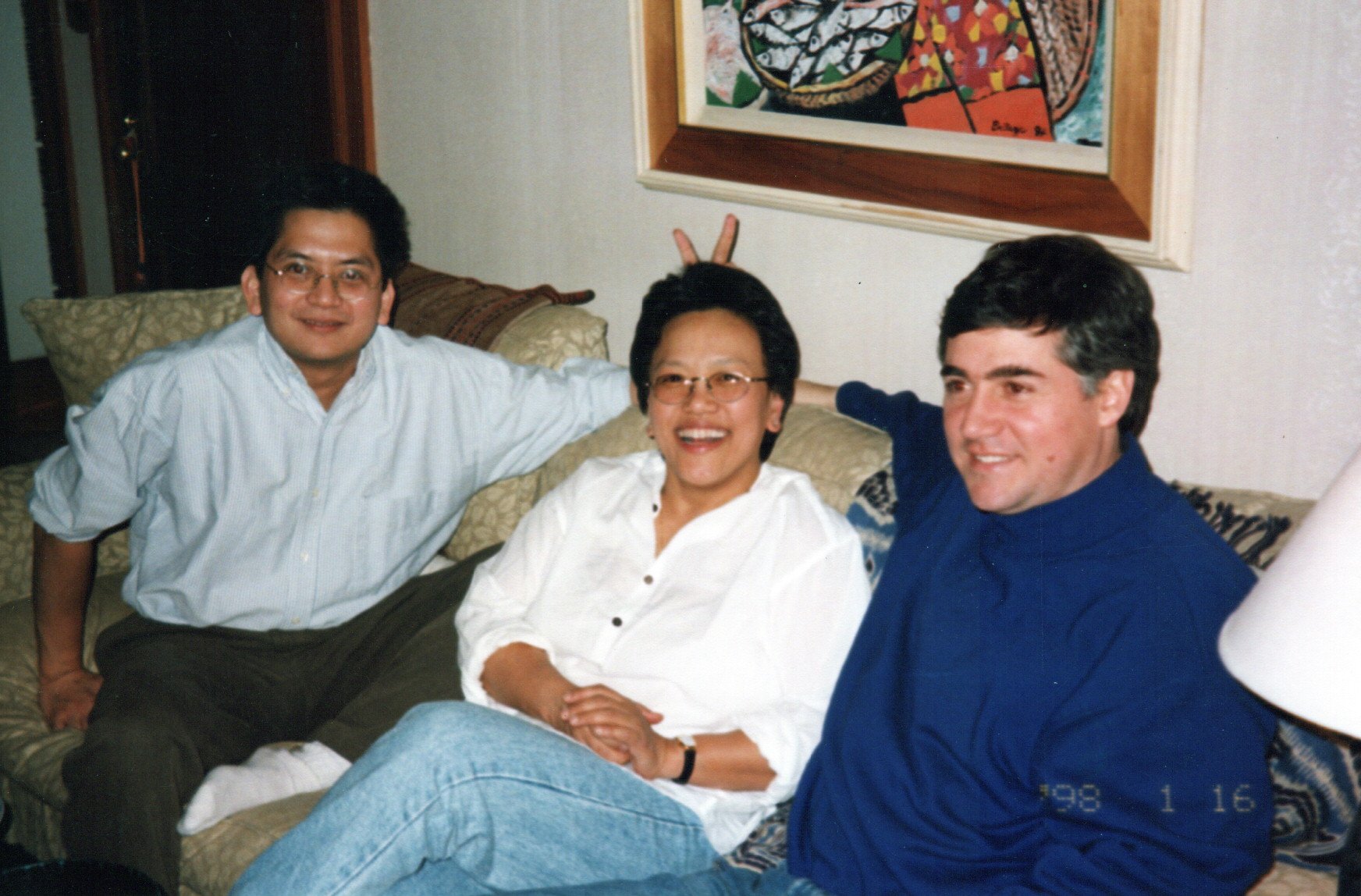
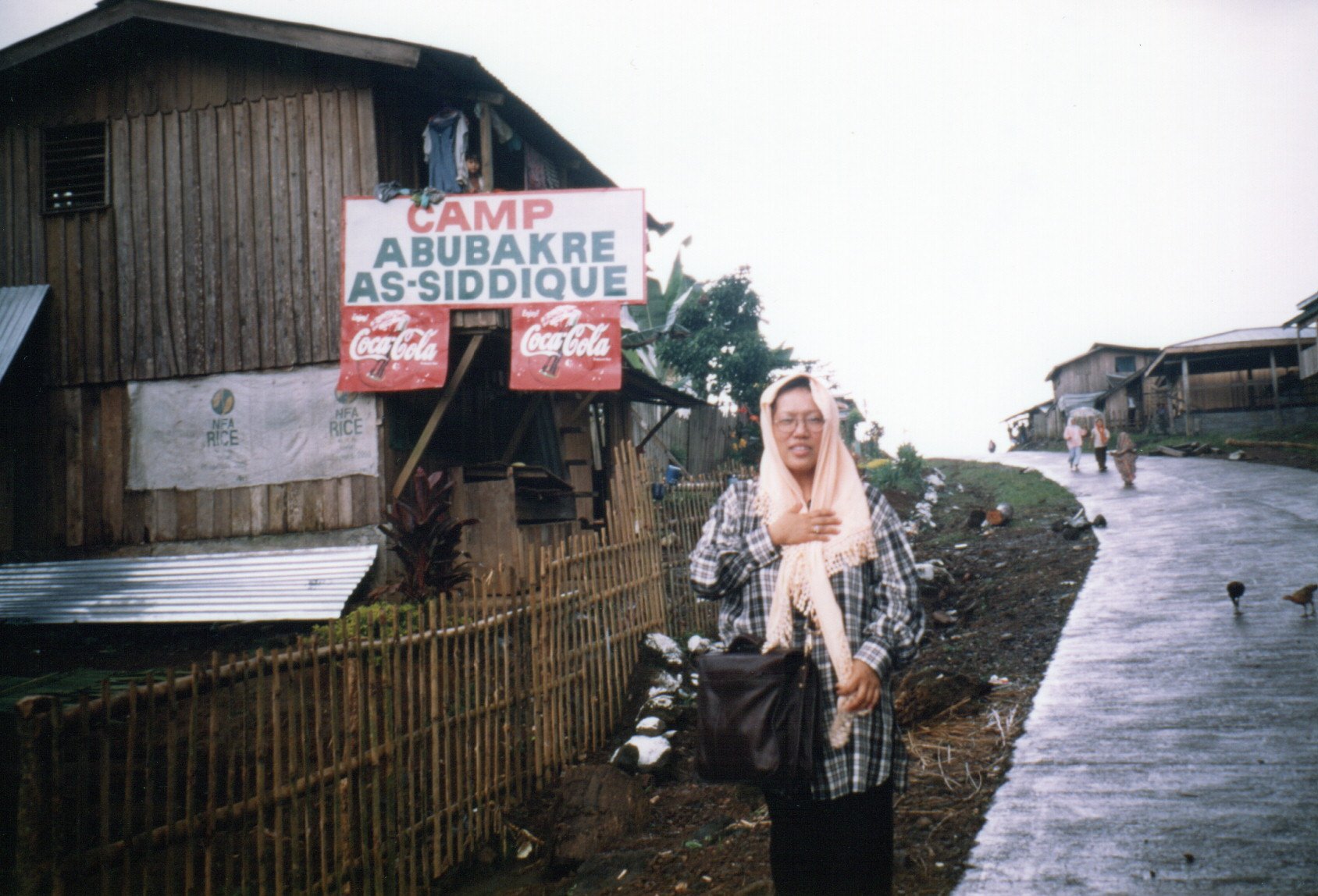
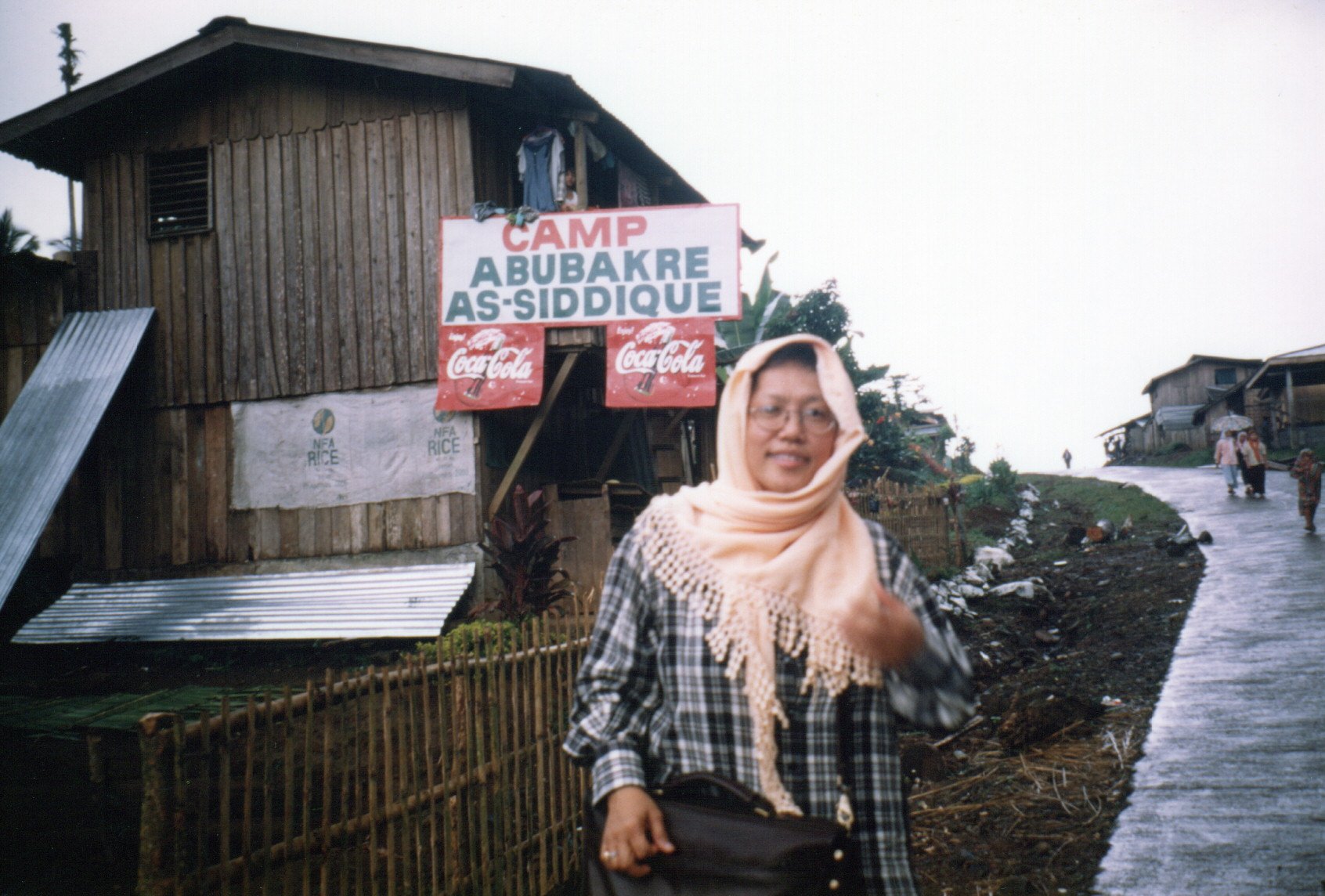
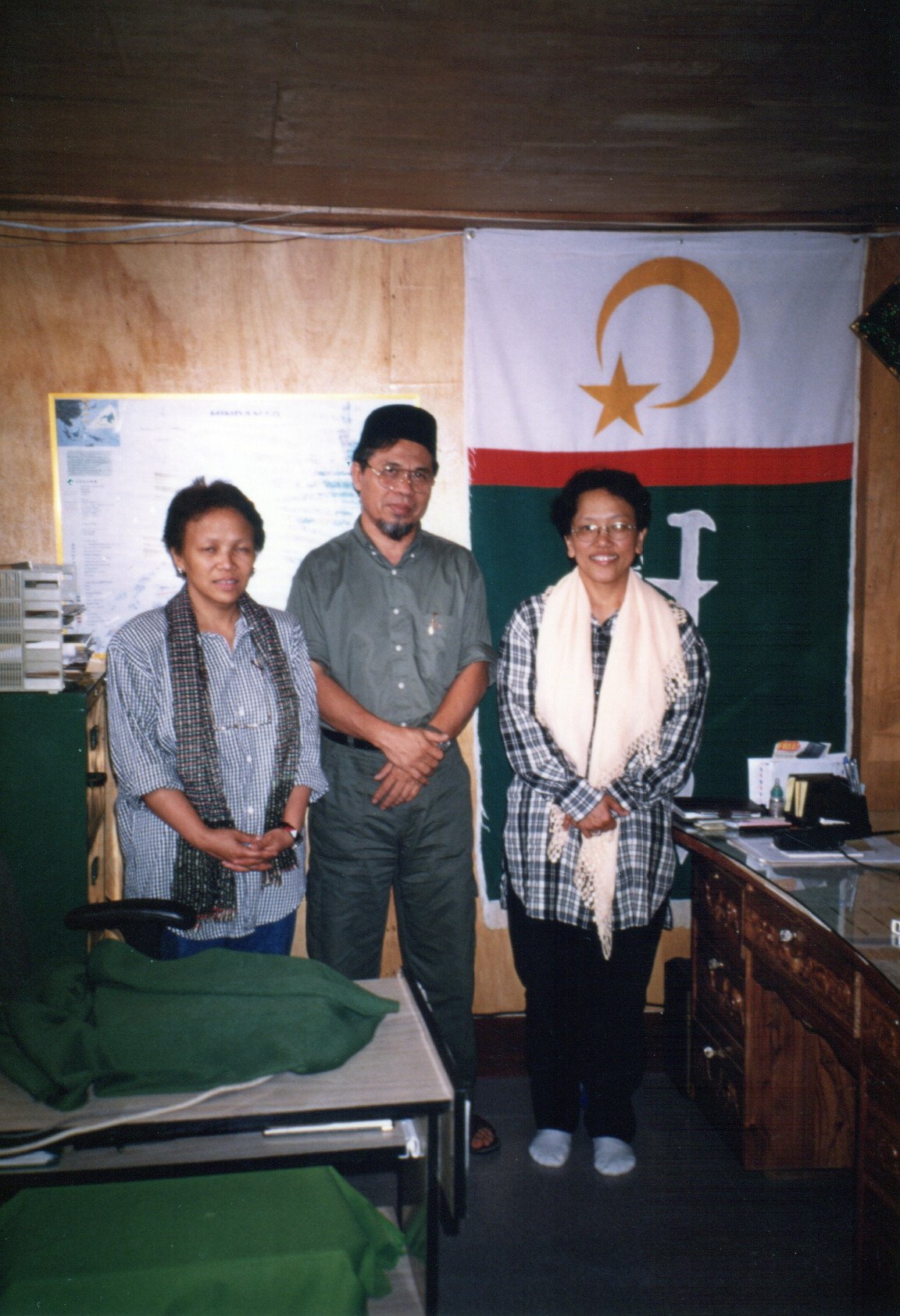
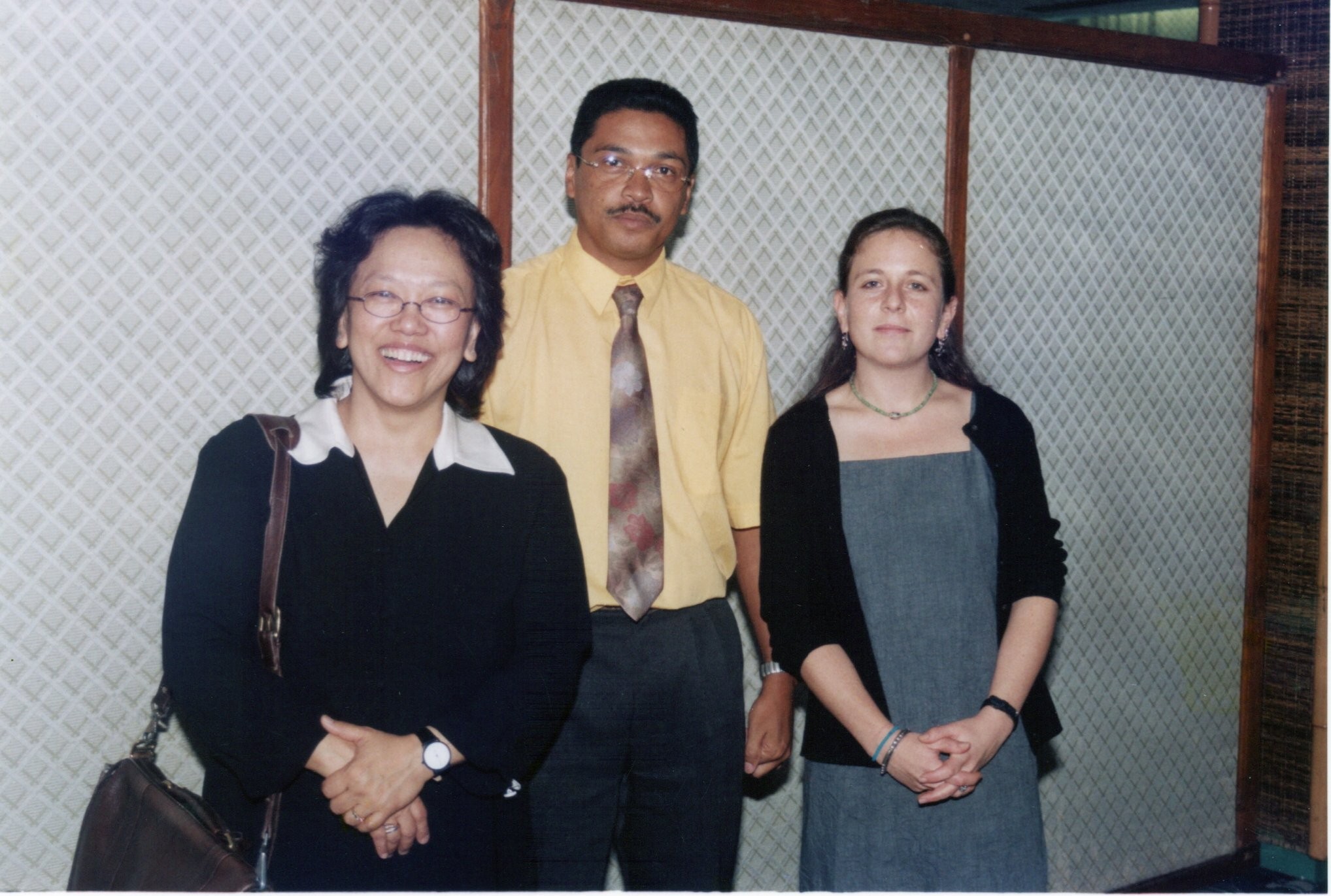
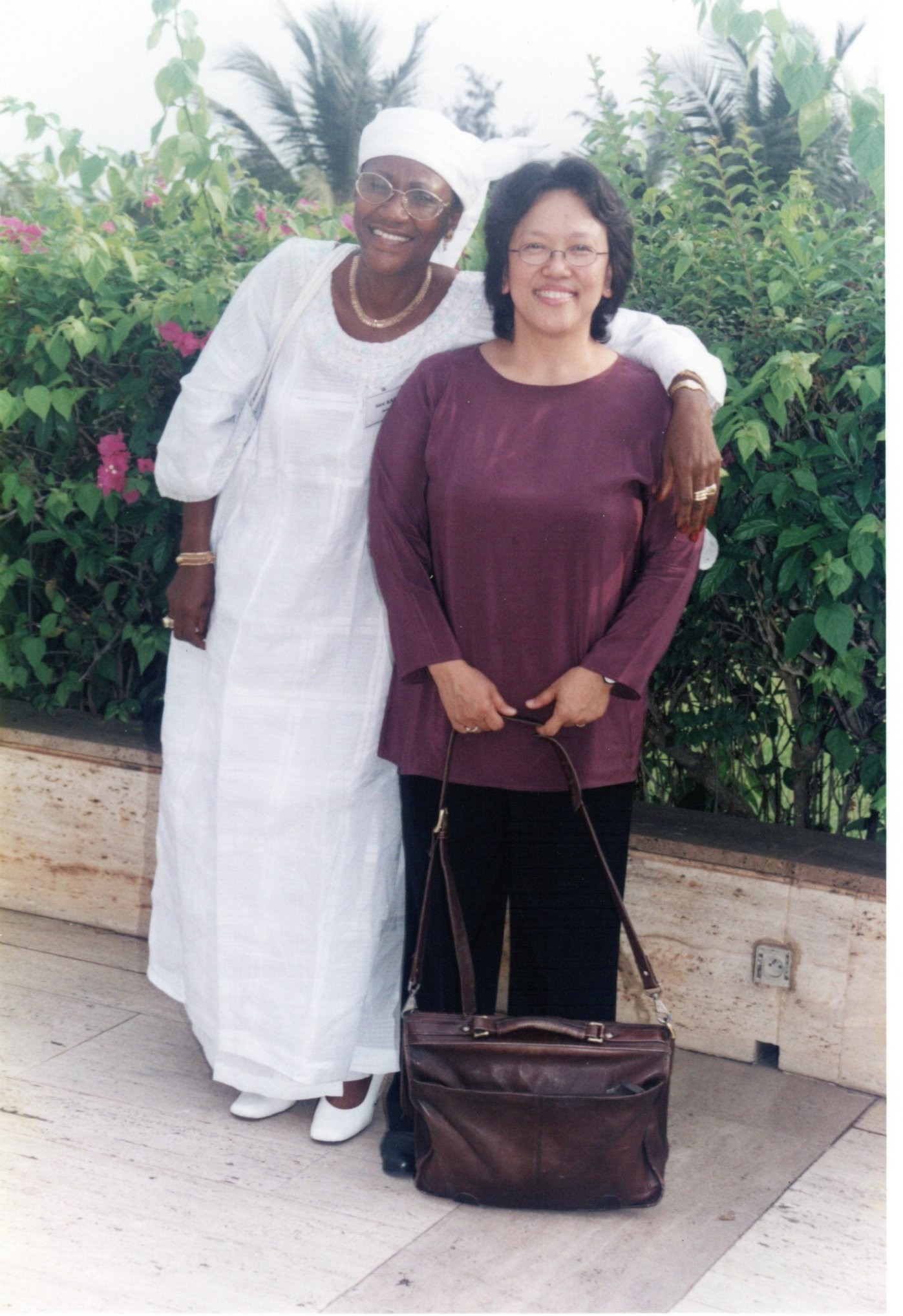
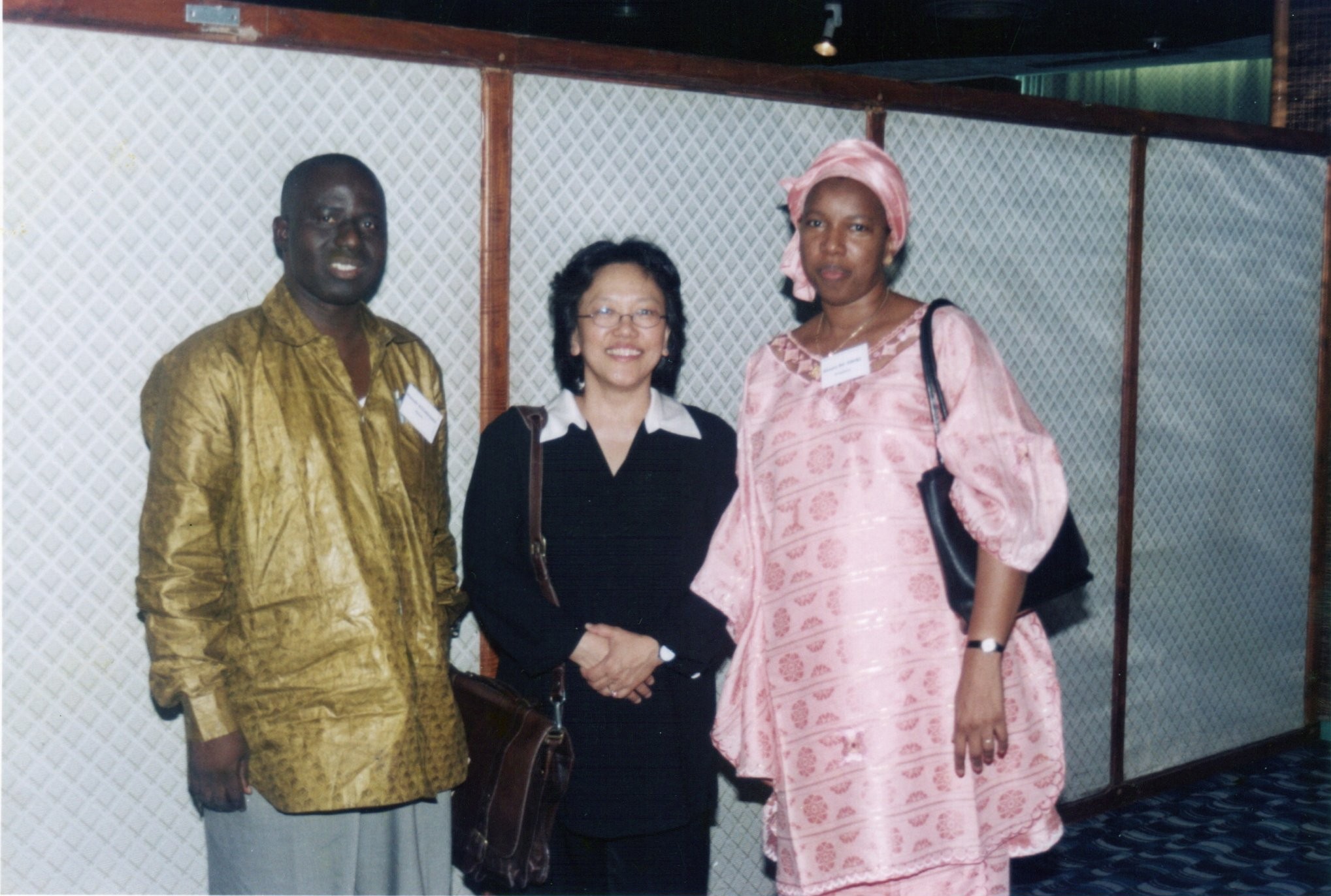
A permanent archive of scanned articles, letters, newspaper features, essays, and journals authored by or profiling Dr. Marilen J. Dañguilan, MD — preserved from original print records with full page-by-page reading.
ARROWS For Change — Vol. 14 Bumper Issue Nos. 1 & 2 (2008), pp. 1–3
“The impulse to strictly conform to sacred texts and moral codes dates back a long time... A fuller understanding of the dynamics of religious fundamentalisms—especially as they affect women’s rights—helps identify and create potential spaces where strategic advocacies could be pursued... In the light of these encouraging global events, all these efforts, collectively and individually, are extremely crucial in resisting religious fundamentalists’ efforts to curtail women’s rights. To seize these opportunities, groups—secular and religious—should make a conscious, deliberate effort to study—and reclaim—religious texts that have been appropriated by fundamentalists for their own ends... Despite what religious fundamentalisms may represent, there is a space where changes can happen. There is hope. And we all should keep the faith.”
Archival Note: Authoritative editorial written by Dr. Marilen Dañguilan (Policy Adviser, Philippine Senate) for ARROWS For Change (published by the Asian-Pacific Resource & Research Centre for Women, ARROW; ISSN 1394-4444, Vol. 14 Nos. 1 & 2, 2008). A tour de force across the history, political theology, and global spread of religious fundamentalisms across Christianity, Islam, Hinduism, Judaism, Buddhism, and Sikhism. Dr. Dañguilan investigates their selective use of modernity, their impact on public policy such as the Global Gag Rule and the Brazilian penal code, and outlines strategic openings to reclaim sacred texts, build inter-faith solidarity, and defend women's rights and bodily autonomy.
AMDD Notebook — Averting Maternal Death and Disability (Issue 7, June 2003, p. 1)
“As there are physical and emotional connections between women and their babies, so are there programmatic connections between maternal and perinatal health. Defining these programmatic connections has been part of the Safe Motherhood Initiative’s growth. It is now clear that to reduce maternal deaths and disabilities, women need to have access to health facilities providing emergency obstetric care (EmOC)... Changes in strategies require tectonic shifts in setting priorities and designing programs and, as in all other changes, may be particularly difficult. Despite this, UNICEF is moving away from TBAs and birth kits to providing EmOC as its core strategy in reducing maternal mortality and, to some extent, perinatal mortality. Ensuring that EmOC is accessible reflects UNICEF’s commitment to saving women’s lives, as an end in itself, and shows UNICEF’s fulfillment of its promise to newborns which is to give them the best start in life... For we believe that women can go through pregnancy and delivery successfully and newborns can survive their long passage through the womb if health systems and services are in place. The most compelling argument for this can be found in human rights principles. Truly, they are — and have always been — the cornerstone upon which everything else rests.”
Archival Note: Official opening editorial authored by Dr. Marilen J. Dañguilan in her role as Senior Adviser, Women’s Health at UNICEF headquarters, published as the lead message in AMDD Notebook (Averting Maternal Death and Disability, Issue 7, June 2003). Demonstrates UNICEF’s landmark tectonic shift away from traditional birth attendants (TBAs) and simple birth kits toward evidence-based Emergency Obstetric Care (EmOC) as a core human rights entitlement, published in partnership with Columbia University's Mailman School of Public Health.
ARROWS For Change — Vol. 7 No. 1 (2001), pp. 1–2
“These deaths are tragic because they are all so unnecessary, especially in view of what we have already learned from the experiences of many countries... We have learned three fundamental requirements to prevent maternal deaths: a) that emergency obstetric care is life-saving because it cures pregnancy and childbirth complications; b) that a functioning health referral system must exist to allow the unimpeded flow of services to any pregnant woman who needs them at any place and at any time; and c) that skilled and competent birth attendants as well as efficient and creative hospital managers and administrators are indispensable to the efficient functioning of the entire health system... Human rights, after all, embody needs, presuppose responsibilities and delineate accountabilities. A woman’s right to quality obstetric care, for instance, presupposes a government’s responsibility to provide it... Thus, to ensure that women go through pregnancy and delivery safely, this pivot of health systems and services need to be in place. And the most compelling argument for this can be found in human rights principles. Truly, they are, and have always been, the cornerstone upon which everything else rests.”
Archival Note: Seminal 2001 lead editorial authored by Dr. Marilen J. Dañguilan for ARROWS For Change (Asian-Pacific Resource & Research Centre for Women, Vol. 7 No. 1, ISSN 1394-4444). Dr. Dañguilan cuts through donor complacency and superficial metrics (such as mere distribution of iron tablets or basic training counting), establishing that maternal survival requires three non-negotiable systemic pillars: 24/7 emergency obstetric care, an unimpeded health referral system, and skilled clinical attendance backed by health human rights accountability.
Sunday Inquirer Magazine — Cover Story Feature, August 17, 1997 (pp. 10–11)
“She is one woman you can’t trifle with. Indeed, even her friends admit that ‘comfortable’ is not a word one uses around Marilen J. Dañguilan, she of the strong opinions and outspoken manner. ‘Her presence,’ writes one feminist, ‘shakes up even gatherings of kindred spirits.’ Yet it is precisely this unflinching candor that makes for a refreshing change in the bruising battle over reproductive rights... ‘You can’t talk of reproductive rights when you’ve got tuberculosis, are malnourished or if your husband beats you to a pulp. Why blunt the other realities that make these rights meaningful?’... ‘You have more degrees than a thermometer,’ recalls sister Marites Vitug teasing her. ‘Women have broken down barriers, overcome obstacles and are now destroying stereotypes that have restricted them. I am confident that one day women will completely do away with these brackets.’”
Archival Note: Comprehensive 2-page Sunday Inquirer Magazine profile (August 17, 1997) exploring Dr. Dañguilan’s intellectual journey: from treating patients in Nueva Vizcaya to crafting landmark Senate health laws, LSE, Harvard Kennedy School, and publishing ‘Women in Brackets’ (PCIJ). Features sister Marites Vitug and nephew Alab in New York.
Philippine Daily Inquirer — ‘Human Face’ Column, June 19, 1997
“Women in Brackets: A Chronicle of Vatican Power and Control by Marilen J. Dañguilan, MD, could very well be a sequel to Marilen’s first book, ‘Making Choices in Good Faith: A Challenge to the Church’s Teachings on Sexuality and Contraception’ which I thought shook the pillars of the institutional, patriarchal church... The book reads like an ‘action’ novel. There is a battle scene in every page. It is also written from a personal, although very scholarly perspective. True-to-life characters come alive: the Pope, Cardinal Sin, then Health Secretary Juan Flavier, the women at the conferences... Wrote Rina Jimenez-David in the foreword: ‘(Marilen) has been a warrior in the war of liberation, and this book is a chronicle of that war — the war for women’s bodies, women’s rights and women’s choices.’ Marilen not only fights well, she also writes well. Published by the Philippine Center for Investigative Journalism.”
Archival Note: Ma. Ceres P. Doyo reviews Dr. Dañguilan’s second book ‘Women in Brackets’ (PCIJ, 1997) in the Philippine Daily Inquirer. She highlights its gripping, frontline account of Vatican diplomacy at the 1994 Cairo and 1995 Beijing UN conferences, and quotes Rina Jimenez David’s foreword.
The Manila Times — Front Page & Continuation (PCIJ Investigative Series), May 30, 1995
“Dr. Marilen Dañguilan, health policy expert and consultant of the World Health Organization and the United Nations Fund for Population Activities, says that this bias is particularly strong against women who are poor and uneducated... Dañguilan says discrimination against women is rampant in medicine because it is a profession dominated by men... ‘Between a male heart surgeon, and a female pediatrician, there is no doubt that the male surgeon is considered higher in status than the female pediatrician,’ Dañguilan says... ‘Patients know their bodies more than anyone else,’ says Dañguilan, ‘and they themselves are the key to their own health. In turn, it is the doctors’ duty to listen to their patients’ complaints, the better to prescribe proper treatment.’”
Archival Note: Historic front-page and continuation investigation published by the Philippine Center for Investigative Journalism (PCIJ) in The Manila Times (May 30, 1995), authored by Luz Rimban. Dr. Dañguilan delivers trenchant analysis on institutional hierarchy, gender bias, and the vital imperative for a radical reorientation toward patient dignity and active listening.
Malaya — Front Page & Page 6 (PCIJ Investigative Series), May 29, 1995
“Philippine Center for Investigative Journalism — (First of two parts): There are a number of cases of sexual harassment by doctors, but patients are discouraged from filing complaints because of the high social stature of physicians... At least 1,700 complaints against doctors have been filed before the PRC since 1983. According to PRC legal chief Pharson Mamalo, 20 to 30 percent of these are cases of immorality... Women’s groups consider sexual harassment by doctors one of the worst forms of sexual harassment against women. A doctor who commits such an offense has ‘privileged access’ to his patient’s body. When sexual harassment takes place, the female patient is often a helpless victim... Dr. Florence Tadiar, executive director of the Women’s Health Care Foundation, says almost all cases are undocumented. While it is hard to pin down doctors on the issue of sexual harassment, some say this is just a manifestation of a bias against women prevalent in the medical profession.”
Archival Note: Historic front-page and Page 6 investigative report published by the Philippine Center for Investigative Journalism (PCIJ) in Malaya (May 29, 1995), authored by Luz Rimban. The landmark exposé broke medical silence across the Philippines, highlighting patient vulnerability, institutional impunity, and the urgent advocacy of women’s health reformers.
Abante (Una sa Balita) — Front Page & Page 2 (PCIJ Series), May 29, 1995
“Philippine Center for Investigative Journalism — Unang Bahagi: There are a number of cases of sexual harassment by doctors, but patients are discouraged from filing complaints because of the high social stature of physicians... Mahirap idetermina ang lawak ng pangaabusong seksuwal na ginagawa ng mga doktor... Ikinukonsidera ng mga samahang pangkababaihan ang pangaabusong seksuwal ng mga doktor bilang isa sa pinakagrabeng anyo ng sexual harassment laban sa kababaihan. Ang isang doktor na gumagawa ng ganitong pang-aabuso ay mayroong ‘privileged access’ sa katawan ng kanyang pasyente.”
Archival Note: Historic front-page banner investigation published by the Philippine Center for Investigative Journalism (PCIJ) in Abante (May 29, 1995), authored by Luz Rimban. The expose broke medical silence surrounding patient abuse and institutional impunity, directly tied to the national medical accountability discourse and Adrian Cristobal's commentary the following morning.
Philippine Daily Inquirer — ‘The Breakfast Table’, May 30, 1995
“Obviously, the subject of sexual harassment by doctors has been taboo for a long time. The reason for this is that women do not want publicity for the humiliation... The essential difference between layman and doctors, that of self-discipline, does not always operate, as 1,700 complaints since 1983 before the Professional Regulation Commission show... There are other things going for doctors too besides looks. It’s the power — the power over disease and the price of cure. But that’s just the thing. To use this power is as despicable as using the power to employ, promote, hire and fire women applicants and employees for sexual purposes.”
Archival Note: Renowned political commentator and satirist Adrian Cristobal examines medical accountability and power asymmetry in Philippine clinical practice, a core systemic issue championed by women’s health reformers and policy leaders.
Philippine Daily Inquirer — Tuesday, August 16, 1994 (Letters to the Editor, p. 9)
“To Cardinal Sin: I HAVE been listening to your rantings and ravings these past several weeks. I know by heart those diatribes you have repeatedly and untiringly launched against the Cairo document, the Philippine delegation to Cairo and the government’s family planning program... What is at the cause of these passionate rages? Please level with me. I am a Catholic, I am earnest and I should know. Is it because sex is vile and corrupting, and contraception will make couples enjoy sex without having to procreate? Is it because sexual pleasure -- even within the confines of marriage -- is disgusting and perverse to you? Is it because sex and pleasure have taken the face of a woman, Eve, who, as you teach, has been the cause of the fall of the human race? Is it because you despise women so much and you have long reduced them to a shriveled and shrunken existence that the thought of women controlling their lives is outrageous to you? They cannot even become priests. They can only embroider your chasubles. Is it because you cannot accept the idea that women are also created in the image of God, not creatures taken out from under Adam’s armpit; that women are capable of making moral and rational choices especially in matters of reproduction; and that women are as sexual as men?... We are also aware that contraceptives do not erode or undermine one’s morals and good conduct in much the same way that crash helmets do not increase road accidents or diet coke do not promote anorexia nervosa... What matters most is a Church that does not judge or condemn and a government that does not consign one to jail for a choice made in good faith. -- MARILEN J. DAÑGUILAN, MD, Solano, Nueva Vizcaya”
Archival Note: The original historic open letter published in the Philippine Daily Inquirer on Tuesday, August 16, 1994, directly addressed to Jaime Cardinal Sin. Widely regarded as one of the most courageous and fiercely articulate public challenges ever written by a Filipino Catholic physician to the ecclesiastical hierarchy, sparking nationwide reader debates and leading directly to international coverage at the Cairo ICPD.
Sunday Inquirer Magazine — September 4, 1994 (Vol. 9 No. 26, pp. 6–7, 14)
“The dust has not yet settled despite the agreement reached by the Catholic Church hierarchy and the Ramos government on abortion, the family and women’s empowerment. No immediate resolution of the issue of ‘natural’ versus ‘artificial’ birth control methods may be forthcoming in this century... But an objective, and less prejudiced, look will disclose that the document’s principles and several provisions are compatible with some of the Church’s social teachings. Moreover, the Church can use these to prod government to work towards fulfilling its commitments. If the Church is willing to walk the extra mile beyond the narrow boundaries of contraceptives and abortion, then it might still recognize that it does share many of the Cairo document’s principles and provisions. It need not have gone into a malicious fit.”
Archival Note: Major authored cover-story feature in Sunday Inquirer Magazine (September 4, 1994), published on the eve of the historic UN International Conference on Population and Development (ICPD) in Cairo. Dr. Dañguilan systematically analyzes the Cairo Draft Programme of Action alongside papal encyclicals and Catholic social doctrine — Gaudium et Spes, Sollicitudo Rei Socialis, Populorum Progressio, Mater et Magistra, and Pacem in Terris — demonstrating unexpected convergences across human rights, agrarian reform, poverty eradication, education, global economic justice, and women's rights.
Southeast Asian Regional Consultation of the Independent Commission on Population and Quality of Life — Sept 20–23, 1994 (Hotel Nikko Manila Garden)
“I am a Catholic. To non-believers and cynics, this statement may mean ‘I am sexually repressed’ or ‘I am always guilty of something’. My Church is perceived as being obsessed with sex and sin. Unfortunately, this obsession has obscured the true meaning and significance of what my Church stands for — social justice and love... But when it comes to the issue of contraception, my Church and I differ. After much study, prayer, and reflection, I am convinced that my conscience is correct, even if it conflicts with the moral teachings of the Church. And in inner peace, I cannot but follow my conscience... The Church’s teachings on contraception are untenable. The Church offers no proof, no scriptural texts, and no solid reasoning that lead to the conclusion that every procreative act must be open to new life. It puts undue emphasis on the biological aspects of ‘the act’ which it perceives as something distinct and isolated from the totality of the human being.”
Archival Note: Complete monograph/consultation paper presented by Dr. Marilen J. Dañguilan at the Southeast Asian Regional Consultation of the Independent Commission on Population and Quality of Life (Sept 20–23, 1994, Hotel Nikko Manila Garden, Philippines). Drawing upon 2,000 years of Catholic canon law and theology — from Augustine and Tertullian through Gratian, Gregory IX, Thomas Aquinas, Sixtus V's Effraenatam, Casti Connubii, Humanae Vitae, and Gaudium et Spes — Dr. Dañguilan mounts an unassailable critique of the prohibition on contraception, defending conscience, marital love, and women's moral agency, concluded with full scholarly bibliography.
The Manila Times — September 25, 1994 (pp. A4–A5)
“I AM a Catholic. To non-believers and cynics, this statement may mean ‘I am sexually repressed’ or ‘I am always guilty of something.’ My Church is perceived as being obsessed with sex and sin. Unfortunately, this obsession has obscured the true meaning and significance of what my Church stands for — social justice and love... But when it comes to the issue of contraception, my Church and I differ. After much study, prayer, and reflection, I am convinced that my conscience is correct, even if it conflicts with the moral teachings of the Church. And in inner peace, I cannot but follow my conscience... The Church’s teachings on contraception are untenable. The Church offers no proof, no scriptural texts, and no solid reasoning that lead to the conclusion that every procreative act must be open to new life... But I have not lost hope. I still believe in my Church. And I know that one day, a century later perhaps, the Church might ‘open another window on the world’ and call ‘the winds of change’ to blow. This time, the Church may yet declare that sex, and an entire human being’s sexuality comes from God, and is beautiful, creative, erotic, life-giving, and life-enhancing.”
Archival Note: Seminal 2-part newspaper adaptation published across pages A4 and A5 of The Manila Times (September 25, 1994), authored by Dr. Marilen J. Dañguilan following the 1994 Cairo Conference and her 1993 National Book Award win.
Terra Viva — Friday, September 9, 1994, p. 10 (ICPD Cairo Daily)
“You see, the Catholic Church has a 2,000 year history of intransigence. It is a long tradition of treating women as second-class citizens... Priests were actually allowed to marry till the tenth century, the institution of marriage was never considered sacrosanct, and even on abortion theologians have found subtleties in the Church’s historical position, allowing that the life of the mother be saved. The Catholic hierarchy has to finally come to its senses and admit that sex exists, sexual intercourse happens, is pleasurable and we are all human beings with genitals. For too long, the Church has regarded all these things as abhorrent and too disgusting to talk about... You have to remember that abortion and contraceptives are just red herrings; what the Vatican is fundamentally against is empowering women... In New York, we took the Philippine constitutional line on the document: neither the U.S. position nor the Vatican position. But the Philippine ambassador to the Vatican spread the word that we had toed the U.S. line on abortion. This got publicised, and that was when the Catholic Church back home launched a holy crusade... The Vatican is acting as if it has the luxury of time. The trouble is we don’t have a second to lose.”
Archival Note: High-impact international interview published on page 10 of Terra Viva (the independent daily newspaper published on site at the 1994 UN International Conference on Population and Development in Cairo, September 9, 1994) by acclaimed journalist Kunda Dixit. Headlining Dr. Dañguilan’s recent Philippine National Book Award win for Making Choices in Good Faith, the interview addresses the political maneuvering that led to her being dropped from the official Philippine delegation under Vatican and domestic Catholic Church pressure after the New York Prepcom, the reality of gender relations and domestic violence behind contraceptive use in the Philippine countryside, and the urgency of empowering women.
Sunday Chronicle — ‘Plus Books’, October 2, 1994 (p. 25)
“This year’s most controversial award goes to the Best Theology Book, Marilen J. Dañguilan’s ‘Making Choices in Good Faith’, published by WomanHealth Philippines. Based on extensive research in Church history and doctrine, the book argues that it is possible to remain a faithful Catholic while using artificial family-planning methods... ‘Issues on artificial contraception, abortion and sterilization, as they relate to the Catholic Church, the State and women, are intricately interwoven into a complex mass. Making Choices in Good Faith tries to unravel this knot...’ The book grew out of the author’s thesis at the London School of Economics and Political Science for her MSc in Social Policy and Planning in Developing Countries... The winner for journalism is the brave book published by Maritess Dañguilan Vitug, ‘The Politics of Logging’ (PCIJ)...”
Archival Note: Historic Sunday Chronicle ‘Plus Books’ coverage (October 2, 1994) by Danton Remoto celebrating the 1993 National Book Awards handed out by the Manila Critics Circle (Virgilio Almario, Fr. Miguel A. Bernad, S.J., Ophelia Alcantara Dimalanta, Doreen G. Fernandez, Resil B. Mojares, and Alfred A. Yuson). In an extraordinary double honor for the family, Dr. Marilen J. Dañguilan won Best Book in Theology for ‘Making Choices in Good Faith’ (WomanHealth Philippines), while her sister Marites Dañguilan Vitug won Best Book in Journalism for ‘The Politics of Logging’ (PCIJ).
Philippine Daily Inquirer — Letters to the Editor, September 9, 1994
“To Dr. Dañguilan: I READ the deep hurt and anger in your letter to Cardinal Sin (PDI, 8/16/94). While the cardinal may feel deeply for us in the Church, it is only vicariously that he can feel the dilemma of the married couple who grapples with the problems of living and sleeping in beds with their ordinary passions and desires... While the concerns you raised are very valid, I would like to share with you the answer that we have found: sharing and learning about our sexuality woman to woman has finally set us free... I have come to truly believe it is the means we women can use to bring our husbands to understand our needs and respect our dignity and join our wish for a better life for ourselves and our families.”
Archival Note: Public reader letter published in the Philippine Daily Inquirer responding directly to Dr. Dañguilan’s historic August 16, 1994 open letter to Cardinal Sin, demonstrating how her courageous public advocacy sparked deep, honest national conversation among Catholic women.
Philippine Daily Inquirer — Letters to the Editor, September 15, 1994
“I READ the letter of Marilen J. Dañguilan titled, ‘The right to choose’ (PDI, 8/16/94). I’m a bit enlightened by what she wrote. As a woman, too, I have to admit, Cardinal Sin, that I agree with her in some points. I wish the good cardinal could reply, point by point, to Ms Dañguilan’s letter so that we may be better enlightened. Looking forward to reading your reply, Cardinal Sin.”
Archival Note: Public letter published in the Philippine Daily Inquirer (Sept 15, 1994) by Carmeli P. Soriano of Makati, endorsing Dr. Dañguilan’s bold open letter to Cardinal Sin and challenging church leadership to respond point-by-point to her arguments.
Philippine Daily Inquirer — ‘At Large’ Column, August 31, 1994
“The two ‘former’ members of the delegation are Dr. Marilen Dañguilan and Dr. Florence Tadiar, who were considered representatives of the women’s health movement and of Filipino women in general. Significant indeed was the presence of these two women — brave and outspoken women, and women well-versed in women’s health and reproductive issues... By removing the representatives of women’s NGOs from the Philippine panel and replacing them with representatives of religious institutions, the Ramos administration has in effect told women that their voices do not matter, that the voices of bishops, imams or their representatives are more important. Even on a matter as life-and-death for women as reproductive rights and family planning.”
Archival Note: A classic column by Rina Jimenez David in the Philippine Daily Inquirer (August 31, 1994) analyzing the government's decision to drop Dr. Dañguilan and Dr. Tadiar from the official Cairo UN ICPD panel under religious pressure.
The Manila Times — August 25, 1994
“Confirming what had already been rumored since early August, Flavier and Habito revealed to media the other day that two women would indeed no longer be part of the government delegation to Cairo. Dr. Florence Tadiar and health worker Marilen Dañguilan would instead act as observers and attend an NGO forum in Cairo... ‘Properly chastened, and perhaps even repentant, the government agreed posthaste to a position at Cairo that would be “mutually acceptable” (read: Church-acceptable).’... The removal from the delegates’ list of Tadiar and Dañguilan would seem to be only one more nail in the coffin of government autonomy in Cairo... Which makes you wonder which century this is — is it the 20th going into the 21st, or is it still the 19th?”
Archival Note: Eminent media scholar and Manila Times columnist Luis V. Teodoro sharply dissects the state’s capitulation to conservative religious pressure on the eve of the 1994 Cairo Conference, spotlighting the exclusion of Dr. Dañguilan.
Philippine Daily Inquirer — ‘At Large’ Column, September 23, 1994
“In the Philippines, of course, it’s widely known that the controversy stirred by Cardinal Sin and conservative elements of the Church resulted in the exclusion of two women NGO representatives... Dr. Marilen Dañguilan and Dr. Florence Tadiar... Dr. Dañguilan, however, says that while it’s true she had called Ben de Leon, the presidential adviser on social development, about ‘reports that we would soon be stricken off the list of delegates,’ De Leon responded by asking if Dañguilan had advocated abortion in a book she had written. ‘Are you saying we should leave the delegation?’ she asked. ‘You can always join the NGO Forum,’ De Leon said. (Ironically, Dañguilan’s book ‘Making Choices in Good Faith,’ in which she criticizes the Church’s stand on family planning and abortion, has just won the 1993 National Book Award.)”
Archival Note: A seminal historical dispatch by Rina Jimenez David detailing the political maneuvering behind the 1994 Cairo ICPD and celebrating Dr. Dañguilan winning the 1993 National Book Award for ‘Making Choices in Good Faith’.
Philippine Daily Inquirer — August 1994
“The government has included representatives of the Catholic Church and Islam in the panel that will represent the Philippines in the controversial conference on population and development in Cairo next week... Removed from the list were Dr. Florence Tadiar... and Dr. Marilen Dañguilan of WomanHealth Philippines... Dañguilan had told the Inquirer earlier she expected to be dropped from the delegation. She added she was asked by Presidential Assistant Benjamin de Leon to transfer instead to the delegation of non-governmental organizations as observer to the conference. Church had objected to her inclusion in the Philippine delegation because she wrote a controversial book that supports abortion when a mother’s health is in danger.”
Archival Note: Historic front-page news account of President Fidel V. Ramos reconstituting the official Philippine delegation to the 1994 UN International Conference on Population and Development (ICPD) in Cairo following intense Church lobbying. Dr. Dañguilan pivoted to represent civil society as an NGO leader.
Philippine Daily Inquirer — Cairo ICPD Dispatches, September 5, 1994
“Prescriptions and practices on how to prevent pregnancy have their origins in ancient Egypt... In her book, Making Choices in Good Faith, Dr. Marilen Dañguilan wrote that Egyptian papyri, written sometime between 1900 and 1100 B.C., contain formulas of several substances that were intended to kill sperm cells or block them from entering the uterus. Dañguilan, a health consultant, is in Cairo as an observer after she was eased out of the original list of Filipino delegates... ‘We have come a long way from crocodile dung and honey paste,’ wrote Dañguilan.”
Archival Note: Dispatches filed directly from Cairo on opening day of the 1994 UN ICPD, highlighting Dr. Dañguilan’s historical and medical scholarship on millennia of reproductive healthcare across ancient Egypt, the Babylonian Talmud, and Greco-Roman antiquity.
Philippine Daily Inquirer — ‘At Large’ Column, September 6, 1994
“Philippine women’s NGOs are well represented here, including Dr. Marilen Dañguilan and Dr. Florence Tadiar who were once part of the official delegation as advisers but were ‘requested’ to take part in the NGO Forum instead. Almost all members of the official Philippine delegation have arrived. Health Secretary Juan Flavier was scheduled to fly in Sunday morning, on the same flight as Sen. Kit Tatad, one of his staunchest critics at home...”
Archival Note: Rina Jimenez David’s on-the-ground column from Cairo capturing the parallel NGO Forum ’94, the vibrant presence of Philippine advocates, and the high-stakes ideological tensions between reformist Health Secretary Flavier and conservative critics.
People Count — Vol. 3 No. 4 (May 1993), pp. 1–4
“Rights, in general, are static. They are abstracted from social conditions, and essentially do not challenge existing social structures and relations... Reproductive rights, as a basic element in the control of a woman’s life, must be transformed into reproductive freedom... We cannot mature into full adulthood if we continue to despise or be ashamed of our own sexuality or loathe the very core that makes us who we are... But among those who have been touched by the contraceptive and abortion issues, and among those who have lived through moral dilemmas and faced up to them, the important thing, after all, becomes one’s ability to choose, and to be supported in that choice. Even if the range of choices is imperfect, it does not matter that much. What matters most is an accepting and understanding family, a circle of well-meaning and faithful friends, a Church that does not judge or condemn, and a government that does not consign one to jail for a choice made in good faith. Such a choice — made in the best of faith — goes way beyond the State, way even beyond the cross, beyond the clergy and the things they teach. It is a choice that has been formed in one’s conscience, in that deep, inner sanctum where nobody can ever invade. For it is in this conscience where God resides and it is here where choices are made. A choice then that is made in the best of faith is a choice that rests in God.”
Archival Note: Featured centerpiece essay published in People Count (Vol. 3 No. 4, May 1993, ISSN 0117-5602, published by the Philippine Legislators’ Committee on Population and Development Foundation, Inc. / PLCPD). Adapted from her award-winning book Making Choices in Good Faith, this profound text charts the qualitative leap from static ‘reproductive rights’ to active ‘reproductive freedom’ across eight structural prerequisites. Accompanied by the 25th anniversary inquiry ‘Humanæ Vitæ: Twenty-five Years of Dissent’ and an official PLCPD author profile honoring her role in drafting the Generics Act, Magna Carta of Public Health Workers, and Rooming-in Act, and her fellowship at LSE.
Press Letters & Commentary — September 1, 1993
“The efforts of Senators Maceda and Coseteng to probe into the case of the Brunei Beauties, presumably in aid of improving their (the senators’) images, are misdirected, to say the least. In holding public hearings of this sort, they succeed in making fools of themselves. What have these women done? What can Congress do? And can we legislate on sexual practices, on morality, and even on ‘protecting women’s images’?... May I remind them further that even in our own country, our women — their images and their bodies as well — need to be protected not only from violent men but also from institutionalized sexism that overtly or subtly denigrates women... Let’s not be so intent on protecting images that we forget why and for whom we are doing this. Let’s work on something less cosmetic. Otherwise, please, just go fly a kite.”
Archival Note: A blistering, incisive letter published on September 1, 1993, authored directly by Dr. Marilen J. Dañguilan. Confronting political grandstanding in the Philippine Senate, she demands systemic institutional accountability for abused overseas domestic workers and women facing violence and poverty, rather than cosmetic moral crusades.
Sunday Inquirer Magazine & PDI Front Page — August 15, 1993 (Vol. VIII No. 249, pp. 6–7)
“‘Quite definitely, the Catholic Church is the last authority to talk on matters of sex, anatomy and women. Unfortunately, it is a lesson yet to be learned by the Church itself, for whom “sex (remains) the grand all-time obsession,”’ declares Dr. Marilen J. Dañguilan in her book Making Choices in Good Faith... Released early this year, the book seems suddenly prescient in anticipating the current clash between the Church and the government on the issue of contraception... Dañguilan’s well-researched book explores the origins of the Church’s teachings and traces their influence on current politics and the population policy of the Aquino presidency. Stitching together a revealing history of the Church’s almost 2,000 years, the book exposes how Church teachings have remained ‘sexist and anti-women’ all this time... ‘The important thing, after all, becomes one’s ability to choose, and to be supported in that choice... Such a choice — made in the best of faith — goes way beyond the State, way even beyond the cross, beyond the clergy and the things they teach. It is a choice that has been formed in one’s conscience... where God resides. A choice then that is made in the best of faith is a choice that rests in God.’ Surely, these are not the words of a heathen?”
Archival Note: Archival 3-part record from Sunday, August 15, 1993: Philippine Daily Inquirer front-page banner announcement (‘A woman doctor challenges the Catholic Church’) and Pennie Azarcon-dela Cruz’s celebrated 2-page Sunday Inquirer Magazine feature review (‘Badgered by Bad Faith’) examining Dr. Dañguilan’s landmark book ‘Making Choices in Good Faith’.
Philippine Daily Inquirer — ‘Human Face’ Column, 1993
“Dr. Marilen J. Dañguilan’s book cuts like a scalpel. The mitred and sceptered male patriarchs of the Roman Catholic Church must be sweating in their chasubles. Not to worry, Marilen has not lost her faith. This line deserves repeating: ‘I still believe in the heart of the Church’s teachings. For if you patiently peel away the layers of centuries of calcified prejudice, bigotry, narrowmindedness, sexism, and chauvinism brought about by the power, greed, fear and ignorance of those who have ruled it, the Church’s underlying ideology of love and social justice still strongly throbs...’ Whichever side you’re on in the great contraception debate, it would be well for you to read Marilen J. Dañguilan’s book... Marilen is a doctor of medicine but she tackles doctrinal, theological, legal and moral issues in a thorough and clearheaded manner. She could have been a journalist... Marilen knows that peeling away all those layers is not as easy as peeling a banana.”
Archival Note: Ma. Ceres P. Doyo’s celebrated Philippine Daily Inquirer ‘Human Face’ review of ‘Making Choices in Good Faith: A Challenge to the Catholic Church’s Teachings on Sexuality and Contraception’. Doyo hails Dr. Dañguilan’s scalpel-sharp intellect and courageous defense of women’s conscience and bodily autonomy.
Philippine Daily Inquirer — ‘Human Face’ Column, September 2, 1993
“THE meeting was clandestine, sort of. We met under the trees where I had parked and there we talked. I couldn’t help thinking about Nicodemus, that character in the Bible who sneaked to talk clandestinely with Jesus Christ for fear of being censured by the powers-that-be of his time... You see there is this paper, a document which is a result of low-key discussions among thinkers, theologians and church workers in the rank-and-file... The paper shares many of the arguments of Marilen J. Dañguilan’s church-shaking book, ‘Making Choices in Good Faith: A Challenge to the Catholic Church’s Teachings on Sexuality and Contraception’... Read the ‘Song of Songs’ in the Bible, says ‘Nicodemus.’ There is no explicit intent of procreation. Come on, it is not about spiritual ecstasy. It is about pure erotic love.”
Archival Note: Award-winning journalist Ma. Ceres P. Doyo recounts an astonishing clandestine meeting with a Catholic theologian and professor citing Dr. Dañguilan’s breakthrough book ‘Making Choices in Good Faith’ as the catalyst for theological reassessment of sexuality, bodily integrity, and women’s conscience.
National Press Letters & Readers’ Forum — August / September 1993
“Marilen J. Dañguilan’s ‘Making Choices in Good Faith,’ as reviewed by Pennie Azarcon-dela Cruz (Aug. 15), is a fearless product of spirited intellect for it questions and challenges the authoritarian and dogmatic Church teachings on sexuality and contraception which it declares as obsolete... In Dañguilan’s book, it is obvious that male chauvinism continues to exist in the Church because of its arrogance, egocentric attitude, persecution, and intolerance of women... I find Dañguilan’s feminine intuition superior for it can shatter anything hidebound by dogmas and conventions. So I’ll buy her book.”
Archival Note: Public reader letter published in the national press (1993) celebrating Dr. Dañguilan’s intellectual fearlessness in dismantling entrenched dogmas surrounding women’s reproductive autonomy.
Manila Bulletin — September 21, 1993
“The first is MAKING CHOICES IN GOOD FAITH which was developed from a Master’s Thesis prepared by Marilen J. Dañguilan for her degree in Economics at the London School of Economics, which challenges the Church’s teaching on sexuality and contraception. The book was sent to me by WomanHealth Philippines... To be critical of the Church’s teachings, the author points out, does not mean one is anti-church. Her argument is that the Church should not dictate public policy. The text is a careful analysis of the ways in which the Church has brought pressure to bear upon the population-related policies of government. Whether you agree with Ms. Dañguilan’s conclusions or not, this is a carefully researched and well-written document that commands attention and a thorough re-assessment of the Church’s role in national political life.”
Archival Note: Prominent Manila Bulletin columnist Beth Day Romulo reviews Dr. Dañguilan’s LSE-grounded work ‘Making Choices in Good Faith’, highlighting its rigorous economic, policy, and constitutional analysis separating religious doctrine from secular state policy.
Philippine Daily Inquirer — ‘At Large’ Column, March 26, 1993
“Allow me to share with you an excerpt from Making Choices in Good Faith, a book that challenges the Catholic Church’s teaching on sexuality and contraception, by Marilen J. Dañguilan, who used to be connected with the Senate committee on health and is one of my favorite women’s health advocates. Says Marilen: ‘If you patiently peel away the layers of centuries of calcified prejudice, bigotry, narrow-mindedness, sexism and chauvinism brought about by the power, greed, fear and ignorance of those who have ruled it, the Church’s underlying ideology of love and social justice still strongly throbs. Despite therefore its intense misogynism and anti-woman bias, despite its strong-arm tactics and obstinate judgmental stance on most issues related to sexuality, I still rest in the hope that in due time, its core will shine through.’ And we will keep faith with you, Marilen. They won’t get rid of us so easily.”
Archival Note: Rina Jimenez David’s stirring tribute to Dr. Dañguilan upon the release of ‘Making Choices in Good Faith’, highlighting her Senate health legacy and her powerful call for compassionate theological reform.
Multi-Paper Launch Press Coverage — March 21–26, 1993
“‘MAKING Choices in Good Faith,’ a new book that challenges the Catholic Church’s teachings on sexuality and contraception, will be off the press soon. Written by Marilen J. Dañguilan, M.D., and published by WomanHealth (Philippines), the book will be launched at 5 p.m. today at the University of the Philippines’ Jorge B. Vargas Museum in Diliman, Q.C. Health Secretary Juan M. Flavier will be the guest of honor... Dr. Dañguilan is a health and gender policy consultant. She was former head of the technical staff of the Senate committee on health.”
Archival Note: Archival compilation of four major metropolitan newspaper announcements celebrating the high-profile launch of ‘Making Choices in Good Faith’ at the UP Vargas Museum, with Health Secretary Dr. Juan M. Flavier as guest of honor.
Manila Bulletin — April 26, 1993
“A medical doctor and an author assailed four bills filed in the Senate that reflect the attitude and belief that the imposition of punitive measures will deter a person from resorting to abortion... Dr. Marilen Dañguilan, who studied medicine at the University of Lund, Sweden and De La Salle College of Medicine, in her book entitled ‘Making Choices in Good Faith,’ noted that such legislative piece is Senate Bill No. 218... Dr. Dañguilan asks: ‘Do harsher punishments really solve the problem of abortion? Do they serve as a strong deterrent to women from resorting to abortion?’... ‘If policymakers are genuinely concerned about rising abortion rates, shouldn’t they start asking the reasons behind women’s decisions to terminate their pregnancies, and the conditions that push women to seek abortions?’”
Archival Note: Archival print scan from the Manila Bulletin (April 26, 1993). Dr. Dañguilan forcefully confronts punitive Senate bills authored by Senators Ernesto Maceda, Francisco Tatad, and Jose Lina Jr., making the pioneering case for compassionate, rights-based public health over criminalization.
Philippine Daily Inquirer — ‘At Large’ Column, May 24, 1993
“Church teaching on contraception, as well as on sterilization and abortion, is often presented as a monolithic whole. For simplicity’s sake, it is summed up, as a chapter title in Marilen J. Dañguilan’s book Making Choices in Good Faith goes: ‘It Has Always Been No.’... Danguilan calls these proclamations ‘remarkably odd’... ‘A woman, even if she has very powerful intuitive abilities, can never know the specific day and hour when she will be raped — even by her drunken and violent husband,’ says Danguilan. ‘How then can she decide which contraceptive device to use?’”
Archival Note: Renowned Philippine Daily Inquirer columnist Rina Jimenez David examines Dr. Dañguilan’s breakthrough book ‘Making Choices in Good Faith’ (WomanHealth Philippines), analyzing the theological contradictions of church doctrine on emergency contraception and rape.
Book Profile: Dr. Marilen J. Dañguilan, MD, MSc, MPA
“Health Policy Adviser and Women’s Health Advocate” — Life can take us in directions we never expected. When Marilen J. Dañguilan enrolled at the UP VSB... she certainly did not think of becoming a doctor, much less an international health professional and advocate.
Archival Note: Complete 7-page archival feature: Book Cover, Title Portrait, Pages 59–62, and Closing Creed. Chronicles Dr. Dañguilan's journey from Nueva Vizcaya clinic to landmark Senate health legislation, LSE, Harvard Kennedy School, UNICEF New York, UNFPA, Sasakawa Peace Foundation (BARMM), Salubris Medical Center, and career highlights.
For high-level consultancy, keynote speaking, media commentary and advisory roles. Share the engagement and she will respond directly.
Inquiries reviewed personally
Global availability for advisory and speaking
Press & media commentary welcome